
Spirit Of The Week: Stranahan’s Cask Thief Whiskey Celebrates Best-Selling American Single Malt In Rare Barrel Finishes
How a Colorado moonshiner grew his whiskey from a horse barn to the most awarded American Single Malt in the country,
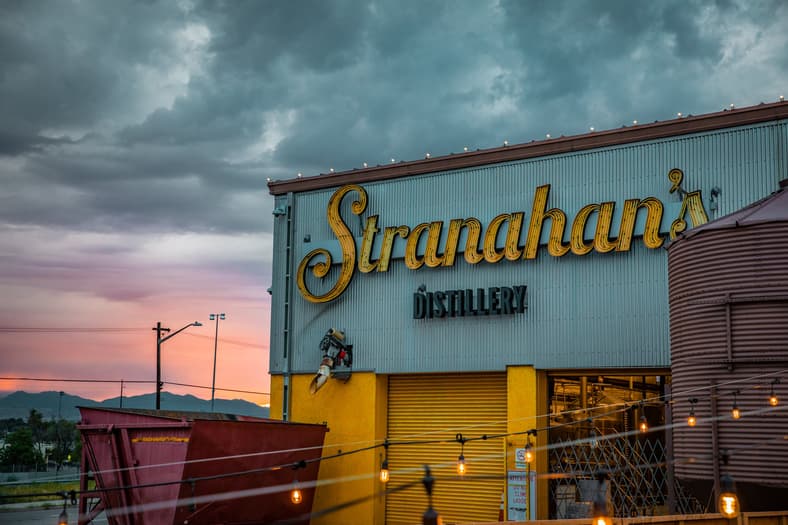
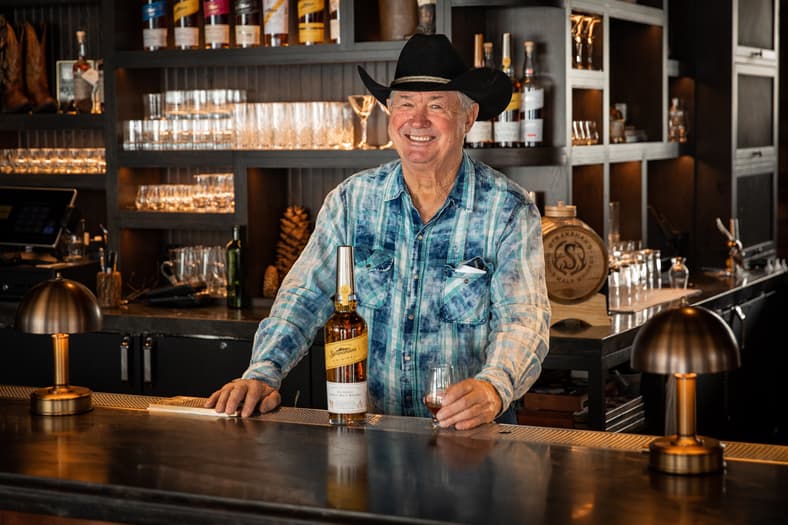
The story of Stranahan‘s Colorado Whiskey is a wild and twisting tail—one we learned firsthand from the founder himself at his ranch in Woody Creek. Despite the name, Stranahan‘s was actually launched by man-of-many-hats Jess Graber, who stood in front of his one-story barn and spun a yarn fitting of what one would imagine from a rugged yet amicable Colorado rancher. Graber shared how he was first gifted a simple still by a man nicknamed Larry the Missouri River Rat, so he began distilling moonshine from corn. He even pulled from his vaults an old mason jar of that early white lightning, labeled Burning Possum). Diligently Graber sharpened both skills and recipe over the years.
One of the hats Graber wore back then was as a volunteer fireman, and on a fateful day he went to squash a blaze at a nearby barn. After extinguishing the fire he befriended that neighbor, George Stranahan, who happened to own Flying Dog Brewery. Through a somewhat winding series of events, Jesse one day asked to use some old Flying Dog beer laying around the property as an experimental wort to distill, and he quickly discovered that this distillate made from 100% finished beer created the tastiest moonshine he’d ever made. So after much pestering, Graber eventually convinced George to help fund a startup whiskey endeavor—only under the condition that they named it after the latter to tickle his ego. Then and there, Stranahan’s Colorado Whiskey was born in 2004.
Fairly quickly this distillery, the first in Colorado since Prohibition, gained local and then statewide fame. Despite being made from 100% malted barley, as was the beer from which it was distilled, they called it Colorado Whiskey instead of American Single Malt—a category decades away from being recognized, never mind defined. Given the excellence of the initial finished beer wort, their use of brewer’s yeast instead of the more efficient spirit yeasts, and Jesse‘s skill at distilling, Stranahan‘s grew to become the number one selling American Single Malt (ASM) in the country, as well as the biggest whiskey maker in Colorado. Curious dabblers turned into aficionados, and soon aficionados into fanatics.
“[Fermenting beer from wort and using brewer’s yeast] are two steps that are very important to why Stranahan’s is different from everything else on the market,” Master Blender Justin Aden later explains as we walk the pristine concrete halls of their Denver distillery. “Coupled with the fact that from Day One in 2004 there were less than 20 craft distilleries outside of Kentucky and Tennessee, and they were making grappa, eau de vie, vodka, gin, whatever they could. It was almost unheard of that anybody was making only whiskey in those days. There was no blueprint for this, there was no business model for this. What we did was really trailblazing not just in American Single Malt, but really in the state of American craft whiskey making.”
You can feel Aden’s dogged determination as he stalks the halls, eager to apply his stamp on Stranahan’s after graduating from Michigan State University with a specialization in ethanol fermentation science and making whiskey for 16 years. He stops in front of the first copper Vendome pot still Graber used after moving on from the Missouri River Rat’s simple still. “We proved concept to an entire era of craft distillers that you could open up and just make whiskey, this place really made it feasible,” Aden continues. “You couldn’t go to the bank and take out a loan to open a craft whiskey distillery till Stranahan’s proved it was possible. So we’re very proud of that.”
By 2008 Stranahan’s was only releasing four-year whiskey, never using small casks, wood chips, nor anything else to accelerate maturation. Their unique process combined best practices of single malt around the world—using only 100% malted barley, brewing a great wort, fermenting a great beer, double distilling in pot stills, never column—with what American whiskey-making is most famous for: aging in virgin char #3 American white oak. Something unheard of in Scotland, Ireland or Japan.
“There was no blueprint for this, there was no business model for this. What Stranahan’s did was trailblazing not just in American Single Malt, but really in the state of American craft whiskey-making.”
Stranahan’s Master Blender Justin Aden
“It’s like a best of both worlds, and that’s certainly contributed to our success today in America,” the Master Blender adds. “Because a lot of bourbon and rye drinkers who might not think of themselves as single malt fans are willing to take a stab at Stranahan’s because they understand that color, they understand those aromas. And i think the melding of those two traditions and expertise has lead us to where we are today.”
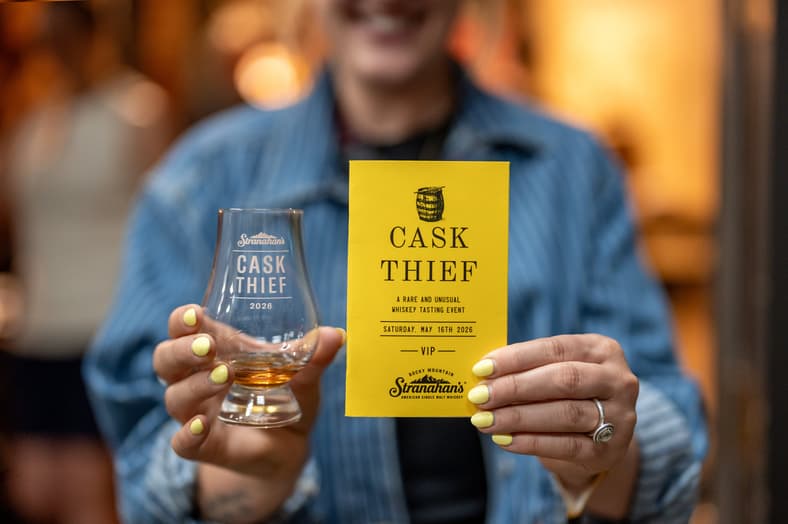
And where we are on this day is the calm before the storm—a magical weekend on Colorado’s calendar known as Cask Thief. Every year since 2016 the beloved annual tradition opens up the Denver distillery for fans to experience firsthand another element that has elevated Stranahan’s production alchemy: finishing barrels. Because Stranahan’s makes just one distillate, its signature 100% barley single malt, Aden and team are a bit limited as to how they can tweak flavor profiles. The solution? Experimenting with a truly mind-blowing array of second and even third barrels—casks that have held spirits, beers, liqueurs and wines from all corners of the globe. Enter many of their warehouses and the racks are stacked with casks from Rhum Agricole to Bushmills with their whiskey aging inside; there are barrels of local stouts sourced from a mile away to Madeira fortified wines procured off the coast of Africa. This Dr. Frankenstein level experimentation began with acclaimed Master Distiller Rob Dietrich (now Master Distiller of Blackened), and exploded with his successor Owen Martin (who took his learned expertise to legends of finishing Angel’s Envy), before Aden took the baton in 2023—and he hasn’t stopped sprinting since.
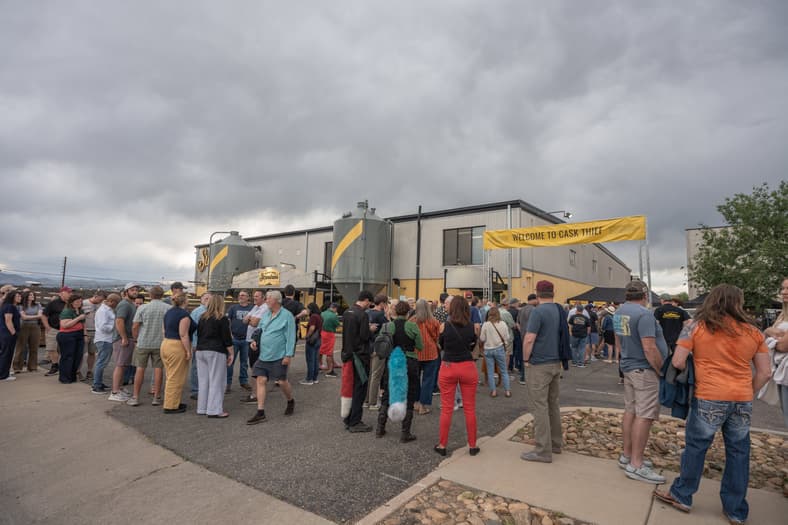
Cask Thief gifts devotees the chance to sip, taste, and explore the full implications of those variables sampled straight out of the barrel, at full strength. No wonder the energy outside the gates feels like the buzz before a great concert, with hundreds of excited ‘Stranafans’ waiting in cue, eager for their chance to taste these rare whiskey gems.
Aden tells Maxim how much thought goes into the barrel selection, handpicking seven one-offs for ticket holders to try: a half-dozen for GA, and a seventh for VIPs (there’s also two types of whiskey ice cream, live music, killer swag and rogue’s gallery of food trucks parked outside). Everyone gets a dram of each barrel, with the opportunity to buy 375-ml bottles of their favorites at the end of the night. This year some of our favorites included ‘No Jerez For The Wicked’ using barrels of Brandy de Jerez—no not sherry, but Jerez brandy—one of the first casks Justin sourced when he took over the Master Blender position. ‘Sake To Me!’ used ex-bourbon casks that most recently held Junmai sake, while the near hazmat 132.2-proof ‘Rockin’ Oaxacan’ aged in ex-Ilegal Mezcal barrels. Then there was ‘My Cousin Vin Santo’—an aptly named gem finished in Italy’s famed ‘holy wine’ Vin Santo casks. “I’m pretty sure we’re the first American whiskey to age in Vin Santo,” Aden told us of the 9-year-old whiskey as we hovered around the super rare cask. “And I’m sure we’re the only American Single Malt.”
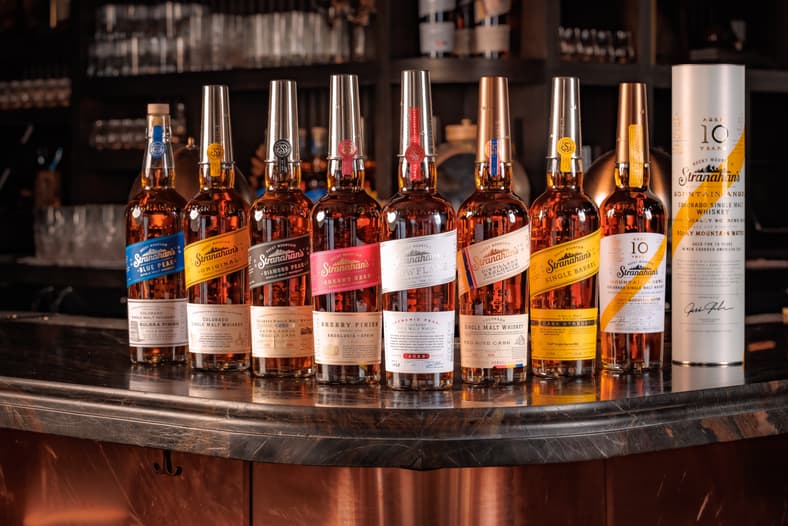
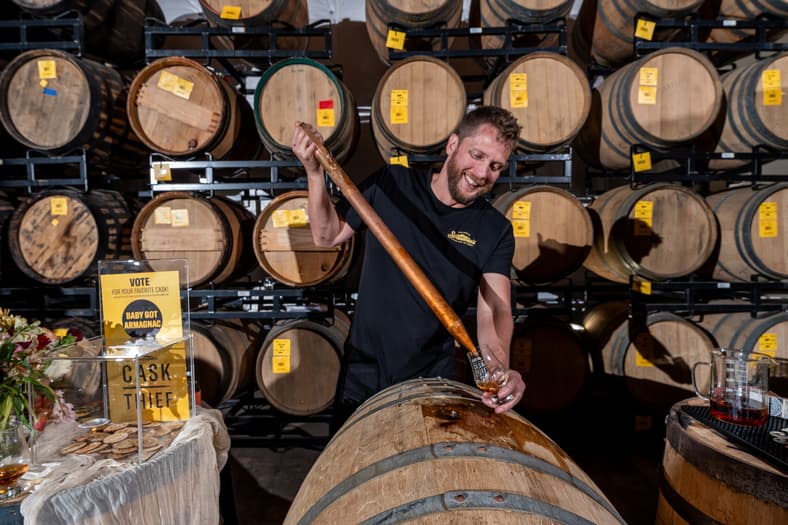
While our personal favorite may have been the Oregon pale ale-aged ‘Make It Schnappy’ due to its very viscous, syrupy arc, the finest was most likely Baby Got Armagnac’—the VIP room darling and oldest of the bunch. The 11-year, 7-month-old heavyweight pours out of the wood at 126.4-proof. “It’s just a really beautiful spirit, we got the aging between the primary and secondary barrels just right. It tastes harmonious, you can’t tell if it’s an Armagnac or a single malt,” Aden says as he removes the dripping whiskey thief from the barrel’s bunghole and pours us a healthy dram. There’s no boasting in anything Aden says or does, but you can catch a glimpse of pride as he pours this whiskey that second finished in Limousin oak barrels that aged Armagnac for over 30 years.
“While we weren’t the first ever to distill a single malt in this country, we were certainly the first to do it full time, with undivided attention,” Aden concludes. “And coupled with the way we make it, it has contributed to our success today.”
Follow Deputy Editor Nicolas Stecher’s travel, spirits and automotive adventures on Instagram at @nickstecher and @boozeoftheday.