
Spirit Of The Week: Whiskey JYPSI Finish Seekers 2026 Mizunara Cask Bourbon
Tweaking 200-year old Japanese oak to dial in the perfect bourbon profile.
There’s a moment Ari Sussman returns to often, not from a distillery floor but from behind the bar. The memory originates somewhere during annual stints in the vineyards of France—pruning vines, working the harvest and crush, even fermenting a little bit—and then spending off-seasons bartending in places like London, Detroit, New York and Hawaii. He recalls pouring glasses for aficionados compelled to excitedly discuss wine minutiae like soil composition, elevation and the nine forests of France… then turning around to pour bourbon for those who couldn’t tell you what grain was in the mash, or what forest grew their barrel oak. Something felt… off.
“The American whiskey industry is about homogeneity, meeting in the middle, meanwhile the wine industry is about expression,” the Whiskey JYPSI maker tells Maxim. “I saw this disconnect between the passion and knowledge that winemakers had and what I hoped whiskey makers could develop: a knowledge about the product beyond marketing.”
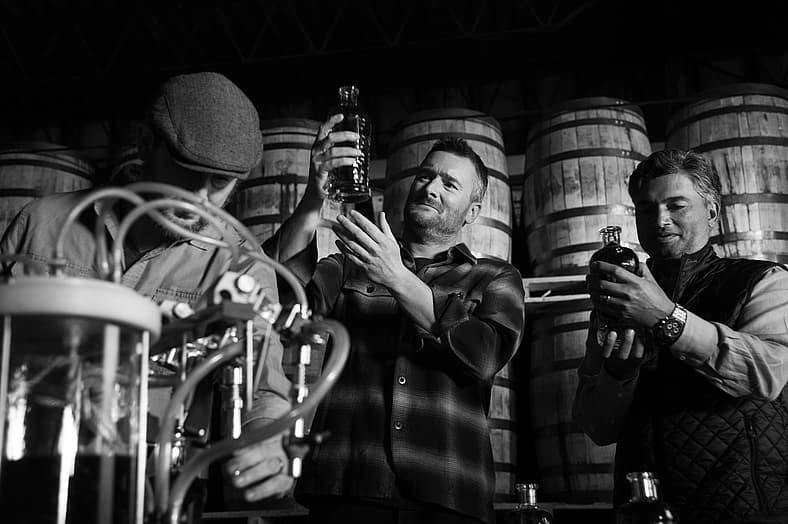
That gap became an obsession, and the obsession a career: four years running Michigan State University’s Artisan Distilling Program (the first of its kind in America), teaching students while helping build 15 new distilleries from the East Coast to California. Then in 2013 he founded the Ann Arbor Distilling Company, his hometown’s first distillery. Finally in 2020 came Whiskey JYPSI, when Sussman aligned with co-founders musician Eric Church and entrepreneur Raj Alva with the explicit mission of making American whiskey talk more like wine.
Sussman explains how Whiskey JYPSI is built on three pillars, what he calls the legs of the whiskey-making stool. The first is grain: heirloom varietals like Cherokee White Eagle corn, sourced with the reverence a Burgundian grower extends to a prized clone of Pinot Noir. The second is wood augmentation: the painstaking, sometimes counterintuitive science of coaxing character from oak, during and after primary maturation is complete. The third is blending: cross-category, cross-border assemblages that constitute the brand’s $200 Legacy series. Every decision, every mash bill, every cooperage source gets printed on the back label. “If you’re trying to hide information from your consumer,” Sussman says flatly, “you’re doing something wrong that you don’t want them to know about.”
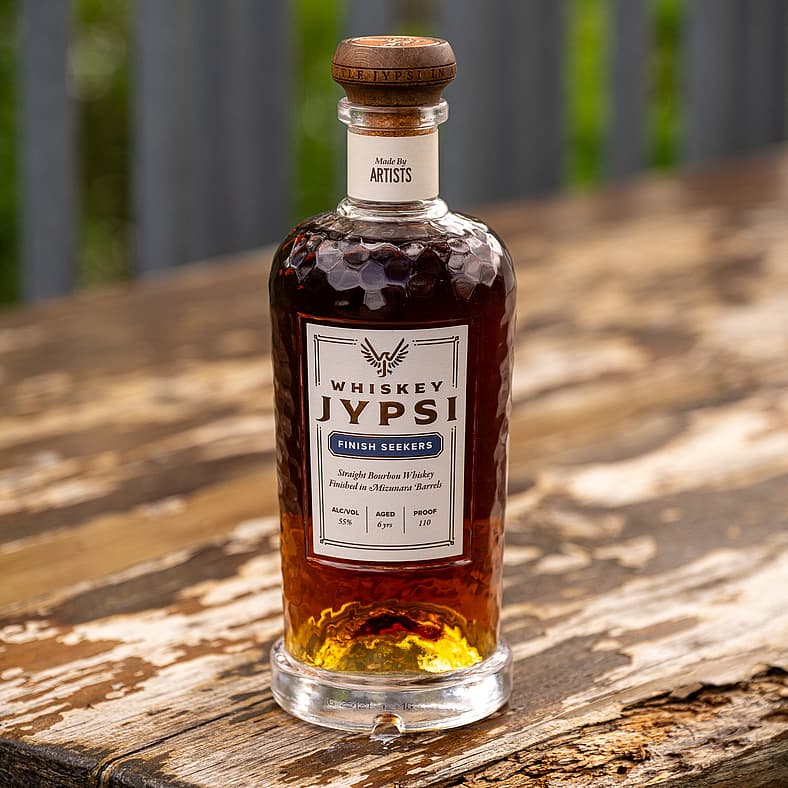
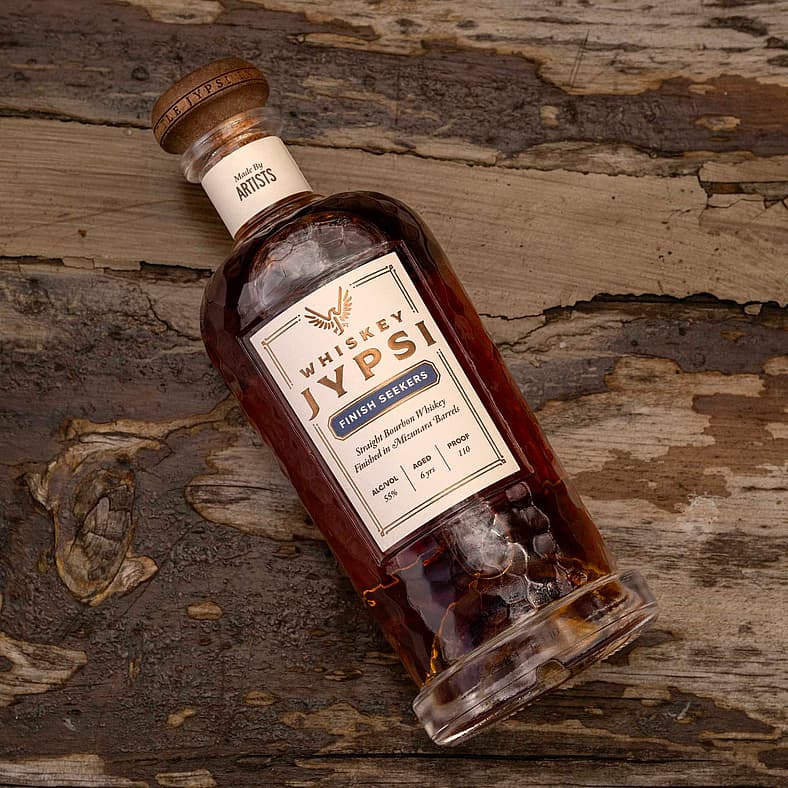
The brand’s latest release—the first expression in their new Finish Seekers series—makes the wood augmentation pillar its entire raison d’être. It is a sourced straight bourbon (some of their partners include Bardstown Bourbon Company, Tennessee Distilling, Virginia Distilling Company, MGP, and North Carolina’s Southern Distilling), aged between six-and-a-half to eight-and-a-half years, finished with mizunara oak staves thrown in the barrels to steep, and finally bottled at 55-percent ABV (110 proof). Why use staves versus pouring the bourbon into barrels for the second finish? “With staves you can go back and shade it in a little bit. The whiskey maker can say: ‘I want half as much wood contact as a conventional barrel,’ or three times as much,” Sussman explains, outlining Whiskey JYPSI’s broader augmentation philosophy. “It’s like painting: you can go back and shade it in a little bit.”
“There’s this mystery with mizunara where you can imagine how you want it to taste, but you’re going to go on a journey with it.”
Whiskey JYPSI Maker Ari Sussman
Of course the mizunara takes central billing here. The Japanese oak Quercus mongolica remains so prized in the single malt Scotch world that a single barrel can command tens of thousands of dollars. The gnarled tree grows slowly, sometimes for two centuries before being harvested, packing its rings with compounds that American and French oak simply don’t produce in comparable concentrations. Where new American oak surrenders vanilla and caramel—the lactone signatures beloved in Kentucky bourbon—mizunara gives up something stranger and more austere: sandalwood, rich baking spices, incense and coconut. “In 200 years of growing a tree can have vastly different characteristics based on where the staves come from, where the tree was in the forest,” Sussman lays out of the Japanese oak esotera. “There’s just a lot of time for the tree to develop its own character. There’s this mystery with mizunara where you can imagine how you want it to taste, but you’re going to go on a journey with it.”
The journey, in this case, ran across four barrels and a finish window ranging from six months to eighteen—a very long nap for a second finish. Sussman is unambiguous on this point: mizunara cannot be managed on a calendar. “It’s not about setting a clock,” he argues. “You go back, you taste each of the barrels, you get to know each of them, you figure out what kind of trajectory they’re going on. And then you harvest them when each one is ready.” Each of the four barrel were pulled individually, at its own moment of equilibrium, then married into the final blend.
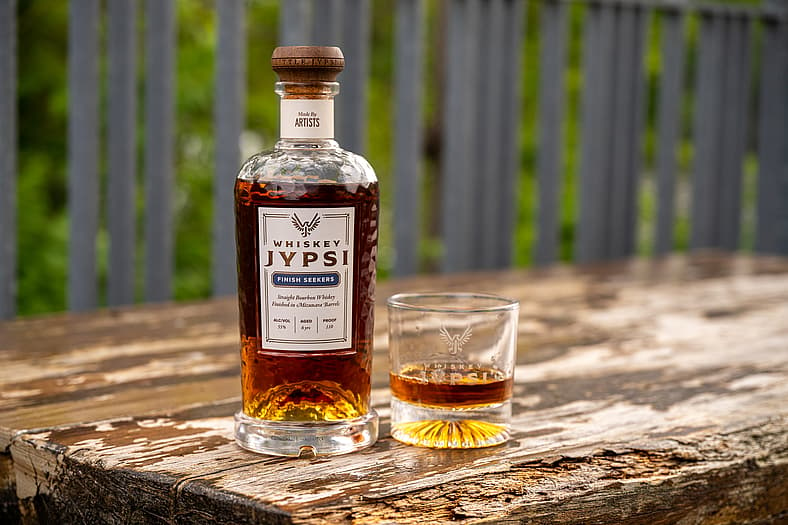
The toasted mizunara imbues a deep amber color, richer than a conventionally finished whiskey. On the nose, the familiar bourbon baseline—the sweet corn and oak char of six-plus years in new American wood—recedes behind incense and dried fruit, a complexity more reminiscent of aged Armagnac or heavily sherried single malt than anything from the American heartland. Notably oily, the mouthfeel feels silky through the mid-palate before a structured tannin finish ties the bow.
That seriousness is, in Sussman’s view, the entire point of Whisky JYPSI—and specifically of Finish Seekers, which now joins the Legacy, Explorer and Tribute series in their portfolio. Stay tuned, Finish Seekers will next travel to Hungary’s Tokaj region for a finish in barrels from the world’s first officially demarcated wine appellation. Sussman sees the collection—which should see only one or two releases annually—as an ongoing research project as much as a Whiskey JYPSI product line: a public record of what happens when a whiskey maker decides wood can be the primary instrument. Get it here for $100.
Follow Deputy Editor Nicolas Stecher’s travel, spirits and automotive adventures on Instagram at @nickstecher and @boozeoftheday.