
Bluetti’s FridgePower Backup System Is More Than Just A Big Battery
This sleek smart appliance, available to buy now at a huge discount on Kickstarter, will save your food during a power outage and cut down on electric bills.
U.S. electricity outages recently reached their highest levels in a decade. According to a report by the U.S. Energy Information Administration, the average American electricity customer experienced a record 11 hours of electricity interruptions in 2024—the spike being largely due to increased hurricane activity over population-dense areas.
That 11-hour statistic might seem minor, if not negligible, until you actually experience the resurrection of a pre-industrial-age lifestyle. For most, the costliest and most significant downside is food and medicine spoilage, and while putting the perishable contents of your fridge on ice sounds like a cinch, the process is an emphatic pain in practice. You—and everyone in your neighborhood—need to find a retailer that wasn’t hit by the outage, buy a giant bag of ice, drive it home, and move $500 worth of food into whatever coolers you can scrounge under the paltry illumination of half-dead flashlights pulled from the junk drawer.
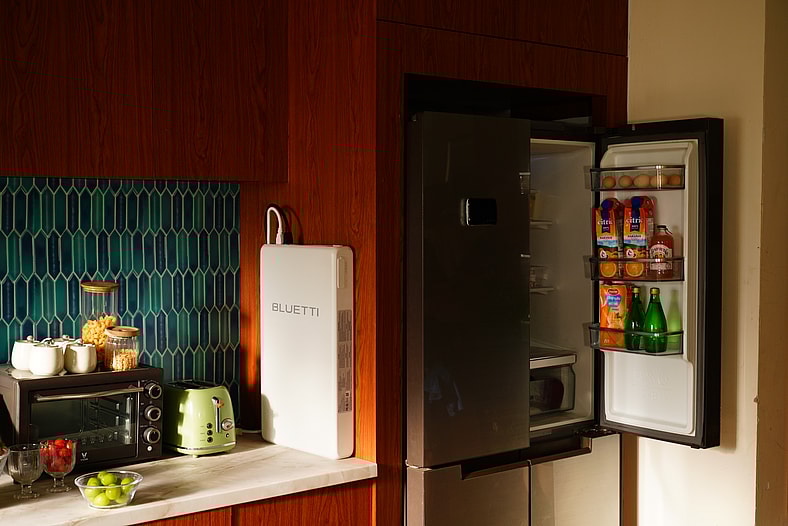
Enter the FridgePower from Bluetti, a global brand founded in 2009 that specializes in backup battery tech ranging in size and scope from portable camping units to multi-pronged systems that can power an entire home. As the name suggests, the device is designed to power a refrigerator during an outage. Upon receiving a test unit, I assumed it would operate like a giant backup battery for a smartphone—I’d charge it, store it in a closet until the electricity went out, and plug in my fridge in case of emergency.
That may be how competing backup batteries for appliances are designed to function, but the FridgePower is much smarter and slicker. The core of the unit is a lithium-iron-phosphate battery—the exact same type that powers the Tesla Model 3. Bluetti chose a lithium-iron-phosphate battery for the same reason that Elon Musk’s revolutionary EV company did—you can use nearly 100 percent of the stored energy without degrading its capacity, and they are rated for 4,000-plus cycles. In the FridgePower’s application, users can expect a lifecycle of 10 years or more.
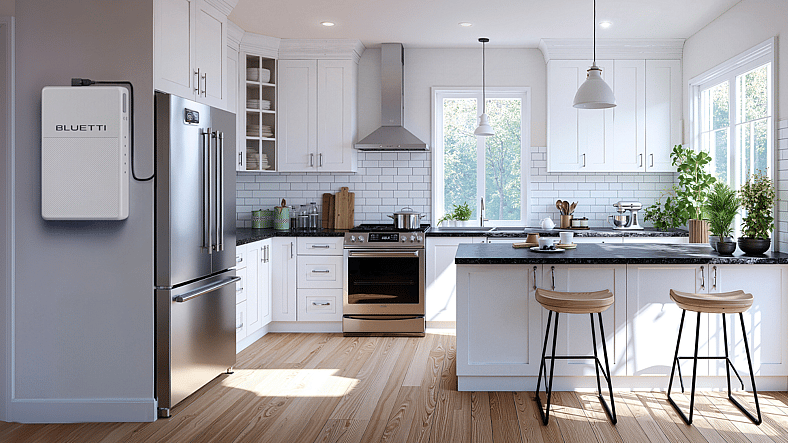
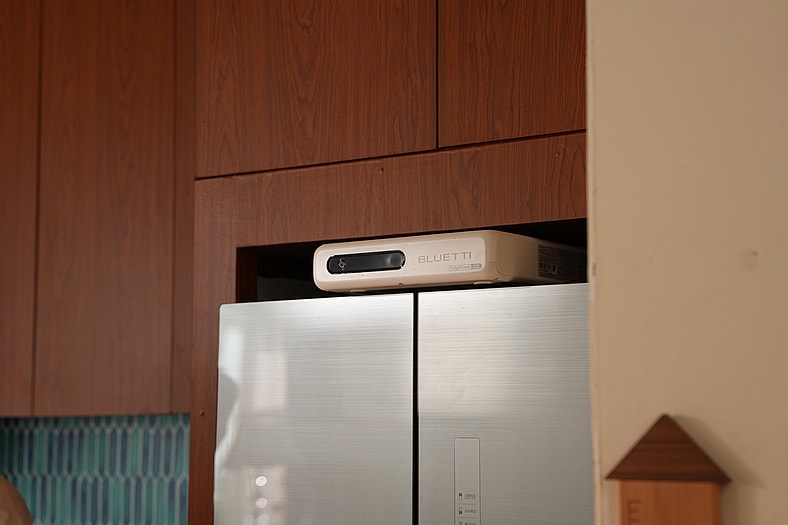
Car battery tech might suggest a massive form factor, but the very first thing I noticed was that the FridgePower is about the size of an end tabletop—under 2 feet long, just over 1 foot wide, and under 3 inches thick. With these sleek dimensions, the FridgePower is designed to be mounted on a wall (with the included hardware) or simply sit atop the refrigerator on anti-slip silicone pads. This distinguishes the FridgePower from competitors again; traditional backup solutions often require repositioning the fridge to plug-in.
The FridgePower, though, is designed to stay tethered to your refrigerator as, what Bluetti calls, an Uninterruptible Power Supply, or UPS. Plug the FridgePower into the wall outlet, plug your fridge into the FridgePower, and the unit’s energy management magic begins to shine as it chooses whether to power the fridge (or any other device) with electricity from the outlet or energy stored in its battery cells.
The first benefit of UPS is obvious: During an outage, there will be virtually zero lapse in power, as the FridgePower automatically taps into its battery cells within 10 milliseconds of an interruption from the outlet. That ability alone justifies the unit’s purchase. However, the financially savvy and budget-inclined will likely immediately activate Time Control. This mode allows users to program the FridgePower to charge during off-peak hours and power devices during peak hours, thereby cutting down on their electric bill. In my city at this time of year, electricity costs roughly $0.14 per kWh during pre-defined peak hours and roughly $0.07 per kWh during pre-defined off-peak hours. By programming the FridgePower to charge during off-peak hours and output power during peak hours, you can cut your fridge’s operating costs significantly.
In Standard mode, it charges normally off of grid power (or solar power, if your home is so equipped). PV Priority mode allows users who’ve installed solar panels to set a State of Charge that dictates where the FridgePower draws electricity from—for instance, setting the SoC at 30 percent will program the unit to switch its charging source from grid power to solar power when the battery has been replenished to 30 percent capacity. Lastly, the Custom mode allows you to combine the features of Time Control and PV Priority.
The FridgePower four modes, data readouts, and firmware updates are all managed through the Bluetti smartphone app, a sort of digital command center that stands out as perhaps one of the best third-party iPhone applications I’ve ever used. The interface is incredibly responsive and free of any dead features. In fewer than four minutes, I enrolled as a Bluetti user, linked the FridgePower via Wi-Fi, and began monitoring the device’s electrical flow—at any given time, you can see exactly how much power it’s drawing from the grid or solar panels, and how much juice it’s diverting to the fridge. If you don’t feel like spending even more time staring at your phone, Bluetti also offers a digital display that magnetically mounts to your fridge.
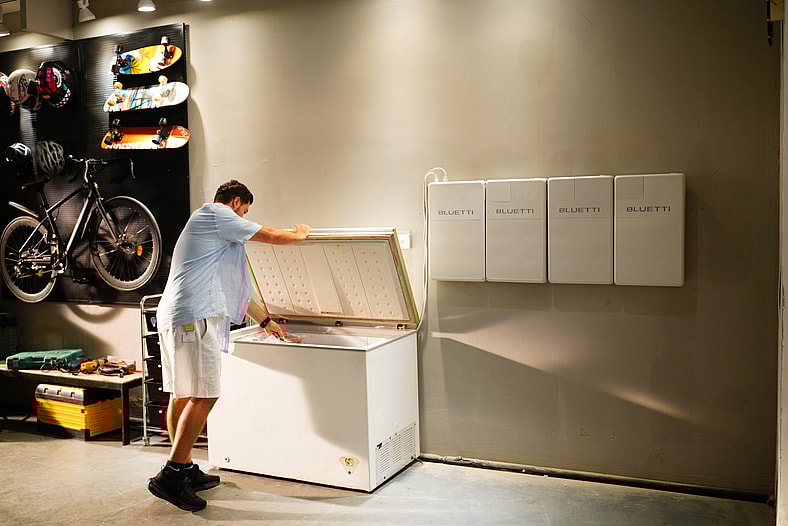
Buyers will also want to consider buying additional batteries. The FridgePower’s base capacity is 2,106 Wh—enough to power my decade-old, definitely inefficient fridge for 12 hours, which notably is just longer than the average total interruption the average American experiences. That capacity can be multiplied to 8,064 Wh with the addition of up to the 3 Bluetti BlueCell 200 backup batteries.
The FridgePower’s relative portability, while not heavily marketed by the company, was definitely considered in its design. The unit comes with a faux-leather handle that screws into the thin edge of the unit—Bluetti went so far as to include recesses in the FridgePower’s outer shell for the handle’s mounting points to sit in, a testament to the build quality. On my next camping trip, I will certainly throw the FridgePower in the trunk, just in case I need extra juice for my phone, electric skillet, or Bluetooth speaker.
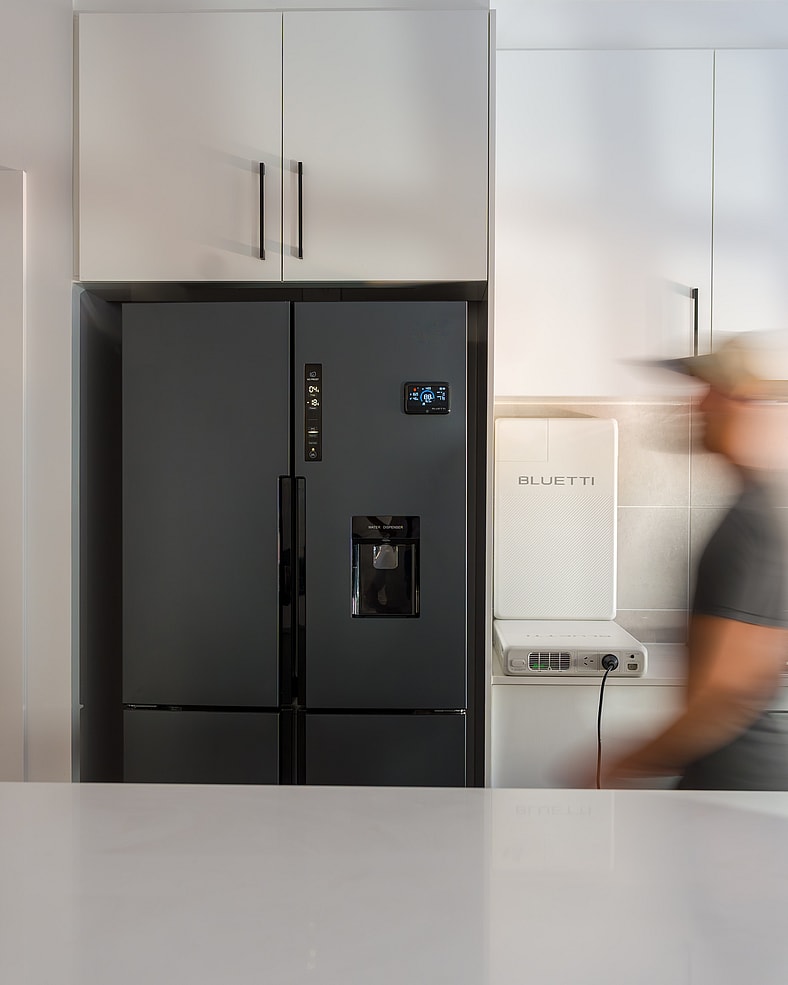
On April 16, Bluetti began selling the FridgePower on Kickstarter with at Super Early Bird price of $759—a $540 discount off of the $1,299 MSRP. After those first 400 examples sell, Early Bird pricing kicks in at $819. Bundles with 1, 2, or 3 BlueCell batteries and accessories are also available at similarly steep discounts. Head to the Bluetti FridgePower’s Kickstarter page for more details and the best available pricing.