
How The Cinqe Girls Matchmake More Effectively Than A Dating App Ever Could
Inside the luxury matchmaking firm that only succeeds when its clients stop needing it.
Dating apps have a business model problem. They make more money when you stay single. Every notification, every algorithmic nudge, every “your profile is getting more attention this week” is designed to keep you engaged, not to find you someone. In the app economy, the longer you swipe, the more valuable you are to the platform.
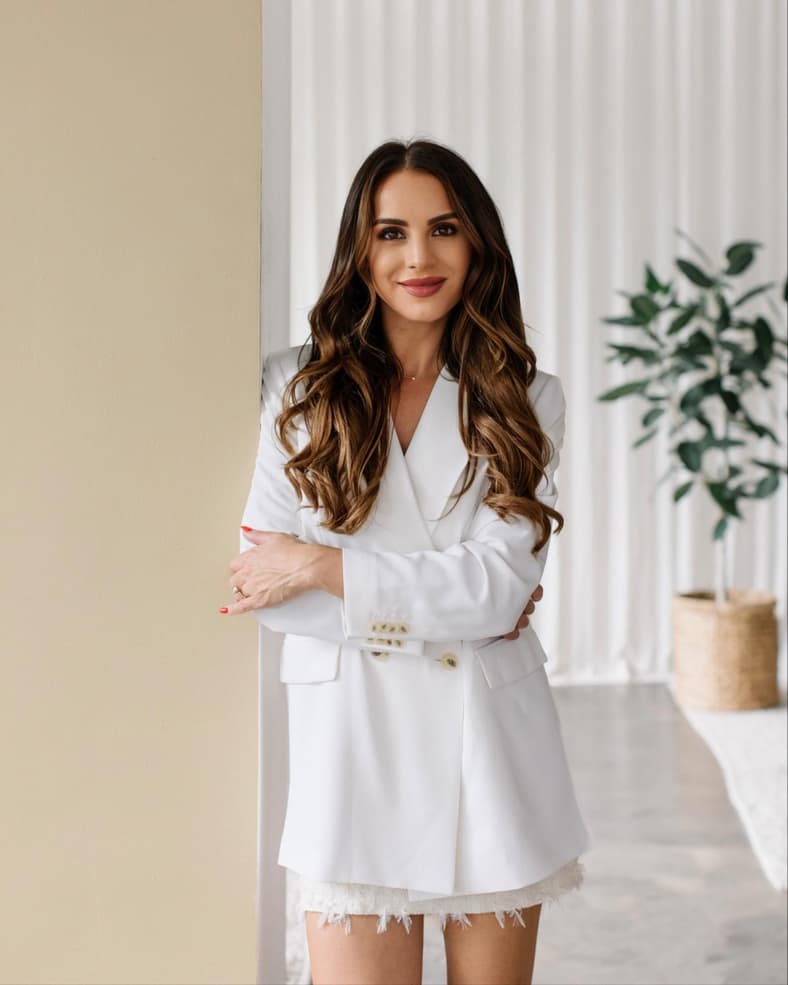
Erica Arrechea built Cinqe Matchmaking on the opposite premise: Her business only succeeds when her clients don’t need her anymore. Sixteen-plus years implementing this counter-intuitive model has made her one of the most trusted names in elite matchmaking and the reason so many of her clients actually find love and move on.
Cinqe charges between $25,000 and $350,000 per contract. Its clients are CEOs, investors, public figures, and some of the most accomplished singles in the world. And almost all of them, Arrechea will tell you, came to her after years on the apps, not because the apps failed to show them options, but because the apps never solved the actual problem.
“It’s not that the apps don’t work,” she says. “It’s that people don’t move on them. The hardest part of matchmaking is actually the scheduling. Getting two busy people to commit to a time, show up, and follow through, that’s where things break down.”
What Cinqe does, at its core, is remove that friction. It takes something that almost happened and actually makes it happen. But that’s almost beside the point. Because the deeper truth, the one that actually justifies the investment, is this: the person most of Arrechea’s clients are looking for is not on the apps at all.
The woman in her early 30s who doesn’t want children. The accomplished professional whose schedule demands a partner with a flexible schedule that doesn’t adhere to the rigid nine-to-five. The person whose values around health, wellness, and how they want to live their life are specific enough that an algorithm built for mass-market matching will never suffice. These people exist. They are exceptional. And they are quietly invisible in the app ecosystem.
“Our clients don’t necessarily need someone clocking into a full-time job every day,” Arrechea says. “They want someone who has something they’re passionate about. Lifestyle fit matters more than job titles at this level.”
Cinqe’s private network, built across the US, Canada, Europe, Australia, Dubai, and beyond, is where those people are sourced. Every potential match is personally interviewed, screened, and evaluated before they’re ever presented to a client. You’re not paying for someone to nudge you into action. You’re paying for access to a world that doesn’t exist on any app, managed by a team of women who have spent their careers building it.
That’s the difference between a $25,000 Cinqe Matchmaking experience and a monthly dating app subscription.
Why Matches On Dating Apps Don’t Lead To Dates
Arrechea is known for saying the quiet part out loud. Most of her paying clients are still on the apps when they hire her. They swipe occasionally, out of habit or boredom or the vague sense that they should be doing something. But they’re not taking it seriously. And she can tell exactly why when she looks at their profiles.
“The profiles aren’t finished. The prompts are half done. The grammar is all over the place. People are using old photos, unflattering photos, or photos that don’t really represent who they are today.”
But the deeper issue isn’t the profiles. It’s what happens after the match.
“The biggest thing I hear? Missed connections. People match, they start texting, and then nothing. One person drops off. Or both do. Or it just never turns into an actual date.”
She’s seen the same scenario so many times it no longer surprises her. “I can’t even tell you how many times we’ve presented someone to a client and they say, ‘Wait, we matched on an app but never met. Yes, I’d absolutely like to meet them.’ That happens all the time.”
Access was never the problem. Execution was.
“People aren’t struggling to meet someone,” Arrechea says. “They’re struggling to move. Everything stalls in the talking phase.”
What AI Can And Cannot Do For Your Love Life
There’s something else she’s noticed, something she thinks deserves more honest public attention than it’s getting. AI has entered the dating ecosystem in a way most people haven’t fully reckoned with. Profiles written by algorithms. Opening lines generated by ChatGPT. Conversations coached in real time by tools that learn your patterns and smooth your edges into something more palatable. Her take is not what you’d expect.
“I actually don’t have an issue with people using AI to help write a profile or even a text,” she says. “We’ve always had help, we’re just calling it something different now. Back in the day, your friend would grab your phone and say, ‘No, say it like this.’ Now AI is that friend.”
She tells a story to prove the point. “I have a close friend who’s been married for ten years. When she first met her husband online, her dad was literally helping reply to his messages because her parents loved his profile and wanted them to meet. This was way before AI. Same concept.”
But she draws a clear line. “Where it becomes an issue is if someone is hiding behind it. Because at some point, you have to meet in person. You’re not falling in love with someone’s text messages. You’re falling in love with how they show up, how they speak, how they make you feel in real life. There’s no AI at that moment.”
She goes further. She thinks AI is going to help her industry, by cleaning it up. “Just yesterday, I told a client, ‘Go ask AI.’ Put in your location, your age, what you’re looking for, and the names of the two matchmaking firms you’re considering. Ask it to help you decide. Why not? This is a huge investment, and people should be doing their homework.”
“There are still too many matchmaking services out there taking people’s money without delivering real value. AI gives people a way to pressure test what they’re being told. And I welcome that. Because the firms that are real, established, and actually doing the work have nothing to hide.”
Cinqe Matchmaking: Luxury Dating Data & Relationship Insights
Years of first dates, post-date debriefs, and relationship outcomes have given Arrechea a front-row seat into modern dating behavior. Some of what she’s found might surprise you.
- 75% of dates that don’t lead to a second meeting end because of oversharing. “Saying too much, too soon, is one of the fastest ways to kill attraction.”
- 65% of clients who want to text or call before meeting never make it to an in-person date. “People get busy, get sick, travel, lose momentum. Texting a stranger you’ve never met is just strange. It rarely helps and usually slows things down.”
- 95% of first dates where someone gets emotional don’t lead to a second. “The other person didn’t sign up to be in a support role yet. We see this end dates nearly every time.”
- 90% of clients who complain about their job on a first date don’t get a second. “It doesn’t come across as vulnerable. It comes across as unhappy, stuck, or negative long-term.”
And then there’s the number that quietly reshapes the entire architecture of how Cinqe designs the dating experience: Approximately 70% of premium clients don’t drink.
“The phrase ‘let’s get a drink’ has just evolved,” Arrechea says. “It doesn’t mean alcohol anymore. It means, ‘let’s sit down somewhere a little romantic and get to know each other.’ It could be tea, soda, lemon water. It really doesn’t matter what’s in the cup.”
The best first dates right now, she says, are simple and pressure-free. A coffee and a walk. Ice cream and a stroll. A casual round of golf. “It doesn’t always have to be a formal dinner. In fact, sometimes that’s too much pressure. It’s not about the setting. It’s about actually meeting.”
If anything, she thinks dating needs to go backward, back to courting. “Seeing someone out at a run club, at pickleball, at a coffee shop, and simply asking them out. That still works. It always has.”
Modern Dealbreakers In Luxury Matchmaking
The dealbreakers have shifted too, and not in directions most people would predict. Five years ago the list was practical: location, lifestyle, ambition level. Today something deeper is driving the conversation.
“80% of our premium clients in their 30s and 40s who already have one child don’t want more kids. These are men who built wealth early, had a family young, and are very clear they don’t want to do that again. The challenge is finding women in their 20s and 30s who also don’t want kids. Those women are unicorns. You can’t really find them online.”
Even when the match is found, the age gap introduces its own complexity. Men dating women aged 20 to 26 present a roughly 35% cancellation rate, even with Cinqe managing every detail and keeping both parties engaged. “We follow up constantly, keep her warm, keep her excited, and still, it’s unpredictable,” Arrechea says. “It’s frustrating, but it’s the reality of that range.”
Vaccine status has quietly joined the list too, a reflection of how deeply values-alignment now matters for this cohort. Arrechea handles it carefully, noting that privacy laws mean it’s always client-disclosed rather than verified or required. But she’s clear it’s real. “We see premium clients on both sides, some want a partner who is vaccinated, while others pay us to find matches who are not.”
Then she saves one observation for last, the one that makes people laugh until they realize she’s completely serious.
“Teeth matter. A lot. Especially with attractive American women. If your teeth aren’t in great shape, there’s a very high chance you won’t see them again. Fitness and teeth are tied to how people view overall health. Whether we say it out loud or not, people are thinking long-term.”
She doesn’t flinch. This is the service.
The Making Of Cinqe Matchmaking
Arrechea started in sales and marketing, made the pivot into matchmaking at 27, and spent years building something before she understood what she was actually building. Even in her former career, she knew.
“I kept thinking, ‘Okay, but what am I building here?’ And the answer was, not much that felt like mine.” She’d always wanted to work with high-net-worth people. She liked the pace, the thinking, the scale. Matchmaking made sense the moment she saw it as a business. “And once I saw it, I couldn’t unsee it.”
She describes herself, without a trace of irony, as “a little bit of the billionaire’s cool girl. I’m professional, but I’m also fun. I like to make people laugh. This process can feel heavy, and I don’t think it should. It should feel human, and yes, even enjoyable.”
As for the fear that comes with walking away from a conventional career at 27? “Of course I had it. I think the biggest fear was just, ‘What if this doesn’t work?’ But I was more afraid of staying where I was and never finding out. That felt worse.”
The old company was called Love Love International. “That version of the business taught me a lot, but looking back, it wasn’t built with intention. I didn’t just want a name that described the service. I wanted a brand. Something short, beautiful, and meaningful. Something that felt elevated and unforgettable.”
The deeper challenge was how to market something you can’t show. “We can’t post our clients. We can’t use real testimonials with names, faces, or videos, because everything we do is private. We have NDAs with all of our members. So the question became, how do you build desire around something you can’t show?”
The answer was tone. Storytelling. Implication. A brand that says everything without showing anything. Over time, that brand became something the industry started to recognize. Cinqe is now widely regarded as one of the Big Four luxury matchmaking firms in the world, a reputation built not through advertising, but through results. What the brand doesn’t show is what the service actually delivers.
Inside The Cinqe Matchmaking Experience
Before a client is even accepted, the team has to agree the fit is right, and Cinqe needs to have the matches to deliver on the search.
“We’re not built for volume, we’re built for fit. Are your expectations realistic? Are you actually ready to date? And do we have what you’re looking for? We have to like you, you have to like us, and you have to like the matches we’re showing you. We’re not here to take everyone’s money. We’re here to do good work with the right people,” Arrechea says.
Once that alignment is there, day one moves fast. A photographer comes to your home. Outfit selections happen on a quick Zoom call. From there, the team is already reaching out to matches. When a date is set, Cinqe handles everything.
“We’ll help you pick your outfit. We’ll plan the date. We’ll make the reservation. We’ll coordinate car service. We’ll tell you what the menu looks like, what the weather is, and give you last-minute pointers so you walk in confident and ready,” she says.
And when it works, when the fit is right and the match is made, something shifts in those high-achievers that surprises even Arrechea.
“They’re all in. They don’t play games. They don’t disappear. They don’t waste time. When it clicks, it moves quickly and with intention.” The same qualities that make them harder to match are the same ones that make them extraordinary partners once they find the right person.
She’s noticed something else too, something that still catches her off guard after all these years. Men fall in love before the date even happens. “They’ll call and say something like, ‘I knew the second I saw her profile, she’s the one,'” she says. “They think it’s going to take time, or a few dates, and then suddenly they’re all in before they’ve even sat down across from her.”
After many years of making matches, she’s also learned not to over-trust her own instinct.
“I’ve seen perfectly compatible people feel nothing, and people who make no sense on paper fall hard. You can’t engineer attraction. You can align values, but the spark is out of your control. I’ve had to remove myself from the outcome. Sometimes my instinct says, ‘This won’t work,’ and I make the introduction anyway. Some of my best marriages came from those matches. It’s not about what I think. It’s about giving people the chance to decide for themselves.”
Arrechea takes it a step further. “People don’t choose the best person,” she says. “They choose the one who makes them feel the most. Right person, wrong time doesn’t work. Right person, right time does. That’s the part no app can predict, and why this will always be a human process.”
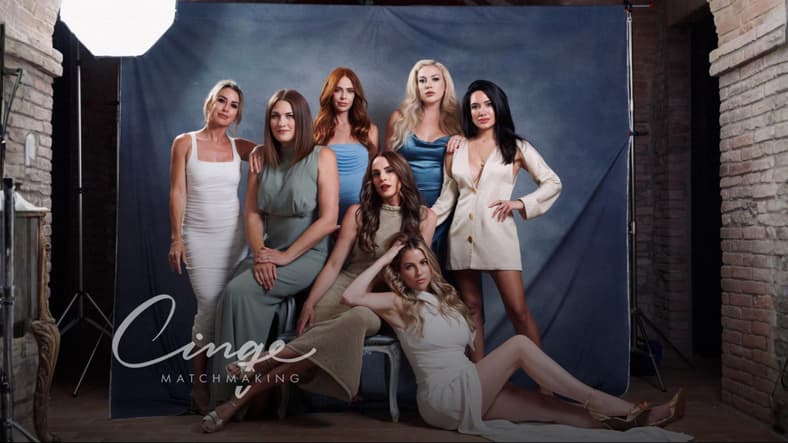
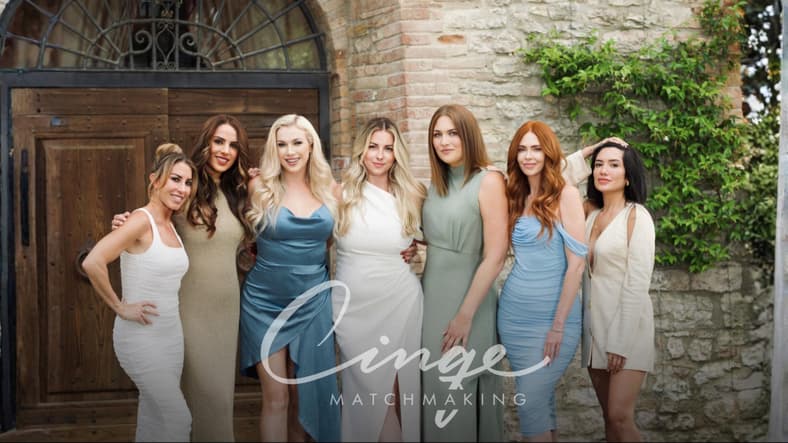
People in the industry have started calling the matchmakers at Cinqe “the Cinqe girls,” which Arrechea says she “kind of loves.” It’s easy to see why, once you meet them.
“Every woman at Cinqe has been personally invited in. We don’t have job boards. We don’t post ‘We’re hiring matchmakers.’ You had to already be a mover, a shaker, someone with a real network and real results.” That was the moment she knew she’d stopped learning the industry and started leading it. When the best in the business wanted to be part of what she was building.
Meet The Cinqe Girls: The Elite Matchmakers Behind The Introductions
There’s a team, women across three continents, each with her own network, her own instinct, her own lane. When they work together, things happen that no individual could make happen alone.
“We’ll be in a team conversation reviewing a client, and suddenly two of us will say at the exact same time, ‘Wait, what about her?’ or ‘What about him?’ and it’s the same person,” Arrechea says. “One matchmaker might know the client deeply, another might know the match through their network, and when those two perspectives come together, that’s where the magic happens.” Meet the women behind that magic.
Annie Garmendia: Partner, North America-Based, Serving Clients Everywhere

Annie Garmendia started matching people at seven years old. She set her own father up with his second wife and has been doing it ever since. Named Canada’s youngest professional matchmaker, she founded The Matchmaker Club before it merged with Cinqe and was awarded Best Matchmaker 2024 by DatingAdvice.com. As partner, she now oversees operations across the globe alongside Arrechea.
Katy Clark: Matchmaker, California- & Texas -Based, Serving Clients Nationwide
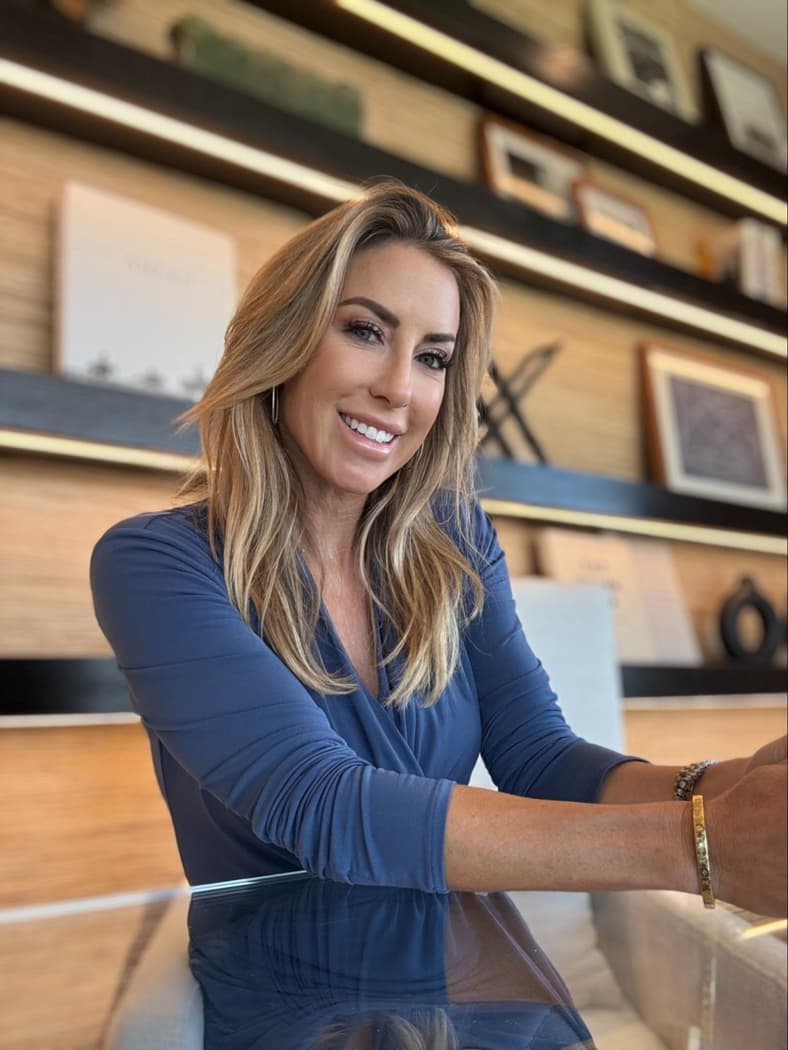
Katy Clark is the face of ABC’s recurring “Dating Do’s and Don’ts” segments and the host of one of the most downloaded dating podcasts in the country. She came to matchmaking after living in China for eight years, running an award-winning restaurant, competing on The Next Food Network Star Season 7, raising three children as a single mother, and finishing a marathon in under three hours and seven minutes. She brings to her clients something no certification program teaches: the experience of having actually done the hard parts of life.
Andrea Miller: Matchmaker, Southern California-Based, Serving Clients Everywhere
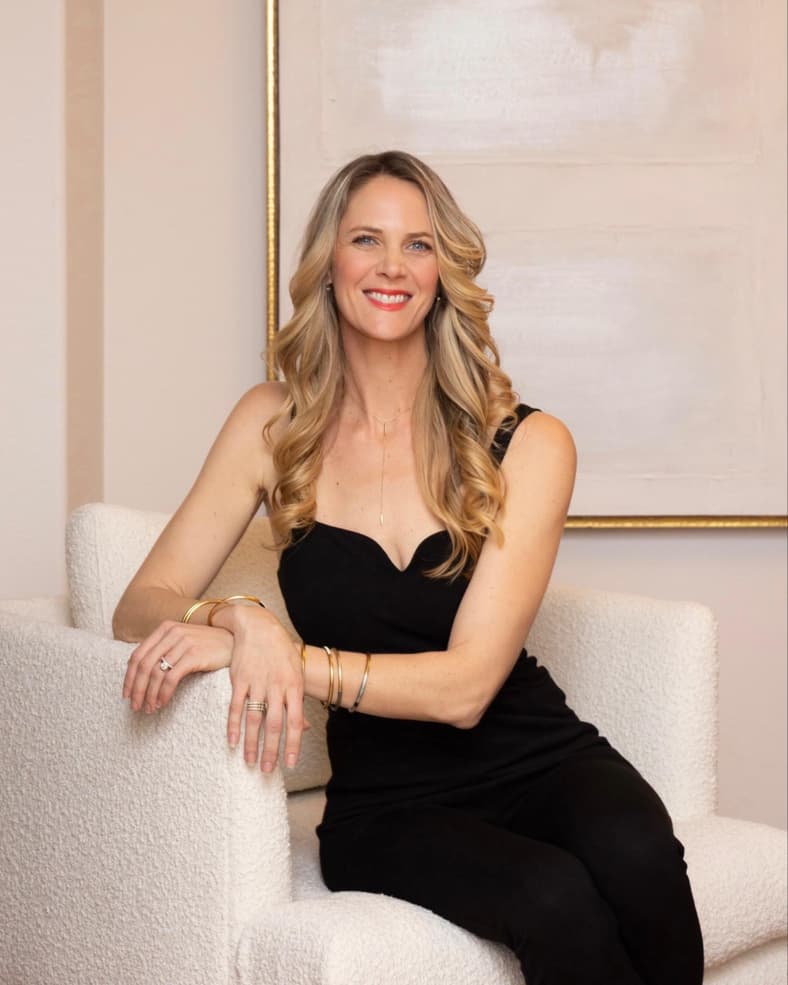
Andrea Miller is a certified matchmaker through the Matchmaking Institute, with more than a decade of experience helping clients find meaningful, lasting relationships. She is the author of How to Get a Guy Worth Keeping and the creator of the “Single No More” framework, a proven system designed to help singles attract and sustain committed relationships. Known for her warmth and practical approach, she empowers clients to date with clarity, confidence, and intention.
Laura Jacobs: Matchmaker, Southern Florida-Based, Serving Clients All Over Canada & The US
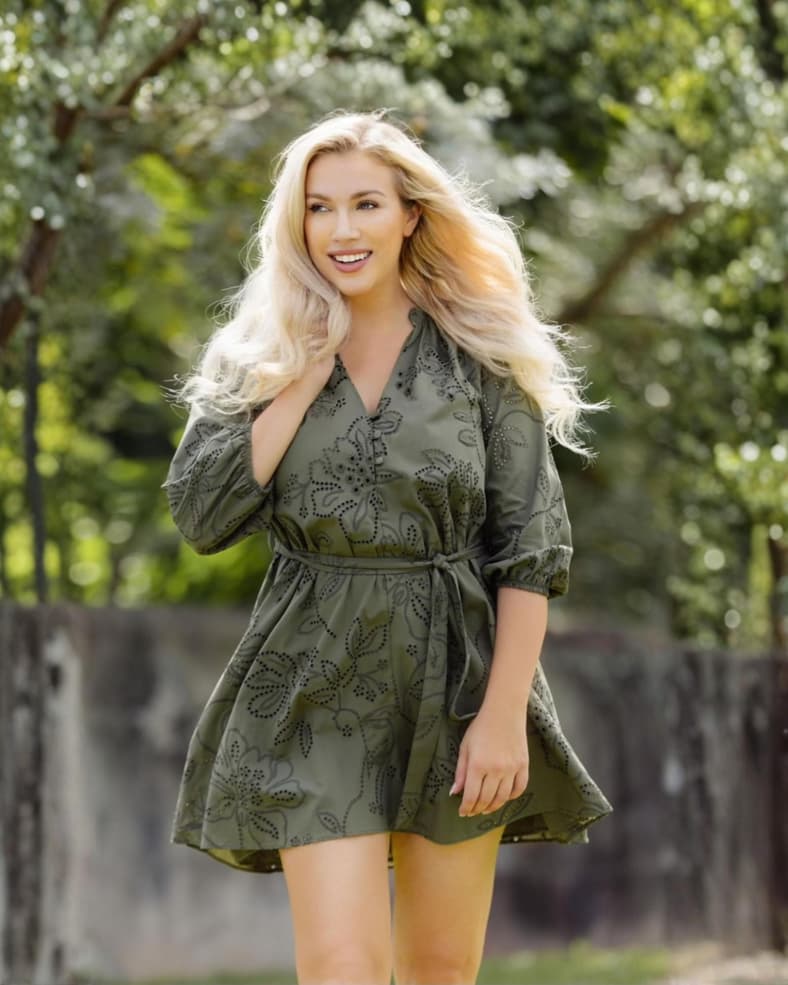
Laura Jacobs is the star of Roku’s Match Me in Miami, a former fashion industry executive, a TV personality, and a mother of 5 who found her own love after years of being publicly honest about her dating struggles. She came to matchmaking because she was tired of coaches telling women to manifest their man or reinvent themselves. Her approach is the direct opposite: relatable, no-nonsense, and built on the experience of having lived exactly what her clients are going through.
Rachel London: Matchmaker, U.S.-Based, Serving Clients Globally

Rachel London is a Stanford Business School alumna, a number one charting singer, an abstract expressionist artist, and an entrepreneur who has been connecting celebrities and high-net-worth individuals through an exclusive global network since 2020. She’s the matchmaker people call when the stakes are highest, the privacy requirements are absolute, and the search needs to cross borders.
Lauren Hunter: Matchmaker, Melbourne-Based, Serving Clients In Australia

Lauren Hunter leads Cinqe’s Australian operations, based in Melbourne. With a background in psychology, natural medicine, and holistic relationship counseling, she has been featured in The Age, Body+Soul, the Herald Sun, and The Australian. Her work in matchmaking is shaped by both professional insight and lived experience, through love, heartbreak, marriage, divorce, and rebuilding. It is that combination that led her to create a more intentional and meaningful approach to modern dating.
Why Successful People Are The Last To Ask For Help With Love
You’re accomplished. You’re selective. You’ve tried the apps, maybe more than once. You’ve wondered, more than once, whether the problem is you. It isn’t.
“You’re not the problem,” Arrechea says. “You’re just using tools that weren’t designed for how high-performing, selective people actually date. Modern dating apps are built for volume, endless scrolling, and low-effort interactions. That doesn’t align with how successful men and women approach the rest of their lives. So it’s no surprise it feels frustrating.” She’s not here to sell you.
“I’m honestly not here to sell anyone on it. You either want this kind of help or you don’t, and that’s completely fine. We show you the matches upfront. You get a real preview of what you’d be investing in before you ever sign anything. It’s not a blind leap.”
But she understands why people hesitate. It runs deeper than money. “It’s the one area where people think they should be able to figure it out on their own,” she says. “You can hire a trainer, a therapist, a financial advisor, no problem. But love? There’s this belief that if you’re smart, successful, self-aware, you should just ‘get it right.’ It should just happen. So people wait. They try apps. They try on their own. They go through a few almost-relationships. And only after they’ve exhausted themselves do they come to us.”
There’s something tender in the way she says what comes next. Not a pitch. Not a close. Just the thing she has watched play out, over and over, across every kind of accomplished, self-sufficient, quietly lonely person who has ever sat across from her.
“People are not afraid to invest in themselves,” she says. “They’re afraid to admit they want love.”
And when they do admit it, when they make the call, what they find on the other side isn’t just a service. “Our clients love us. We text, we laugh, we’re involved. It’s not just about dating, it’s having a team in your personal life. You can tell us anything, and there’s zero judgment.”
The relationship goes both ways. “We turn people away all the time or refer them elsewhere if it’s not the right fit. We’re not here to take everyone, we’re here to get it right.”
What she wants you to walk away knowing is simpler than any pitch. “There is a better way to date. A more private, intentional, and efficient approach, one that respects your time, your standards, and your lifestyle. We don’t give you more options. We give you better ones.”
Erica Arrechea is the founder of Cinqe Matchmaking. Learn more at cinqe.com or reach out at [email protected]