
2026 Lamborghini Temerario: Test-Driving A New Electrified Raging Bull Through The Hills of Italy
Beyond the latest hybrid, we took a deep dive at Lamborghini Heritage Days with the most legendary models ever, including the Miura and Rambo Lambo.
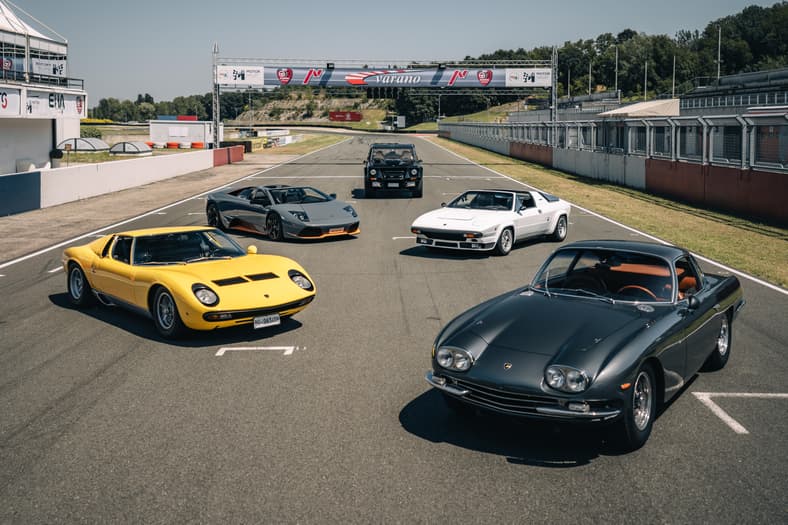
Lamborghini recently held its Heritage Days, an inspired idea allowing journalists to experience the decades-old vehicles that birthed the legend of the Raging Bull. This is the sort of invite you receive in your inbox that sends the heart palpitating like Adderall, eyes moistening melodramatically like you’re listening to the guitar solo of “Comfortably Numb.” So we flew all the way from Los Angeles to their homeland in Emilia-Romagna, Italy to slip behind the wheel of a half-dozen vehicles from Lamborghini‘s baroque past—all celebrating significant anniversaries this year. A true rogue’s gallery of not just the greatest Lambos ever built, but amongst the most singular vehicles in automotive history. These included the first Lamborghini ever, the 350 GT, updated in 1966 400 GT form. The 1966 Miura, the first ever mid-engined production supercar, and the model that launched Lamborghini into the stratosphere. The 1976 Silhouette, the targa-topped version of the V8-powered Urraco, among the rarest Lambos ever built. Then last but certainly not least, a 1986 LM002—the world’s first super-SUV. A vehicle that is to luxury SUVs what the Hulk is to nuclear physicists. It is not hyperbole to say these are unicorns we’ve been wishing our entire lives to throw our saddles on.
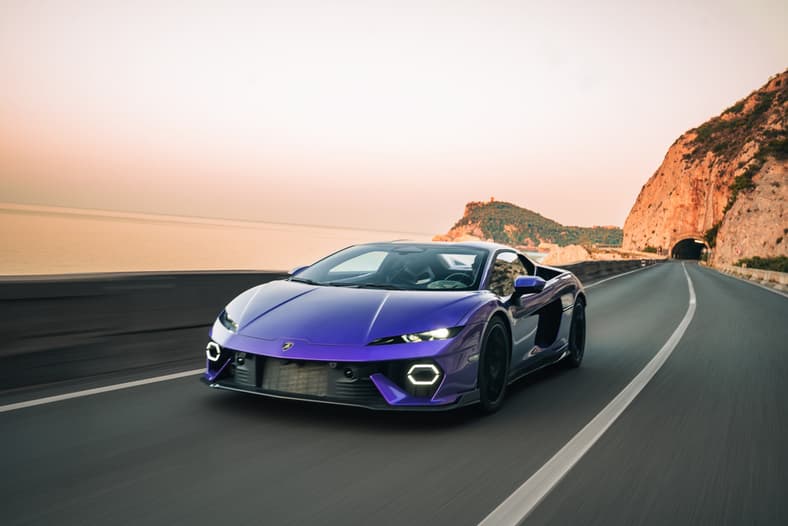
Sadly most of these cars are still under embargo and we’re not yet allowed to share driving experiences. However one we are allowed to discuss is also Sant’Agata’s latest: the Temerario. It’s not only the newest bull in Lamborghini‘s vaunted stable, but as its first hybridized production powertrain is also arguably its most technologically advanced. And while we count the seconds until we can share the joys of crushing dirt roads in the Rambo Lambo, or piercing the verdant hills of Emilia-Romagna in a open-air 1964 Silhouette, today we are here to discuss the Temerario.
We’ve had the luck of driving this newest Raging Bull no less than four times over the past couple months: First at the Sonoma Raceway north of San Francisco; second in lightweight Alleggerita trim (which shaves nearly 60-pounds via carbon fiber bits) in the cow hills overlooking Barstow; third spelunking Los Angeles’ many highways and back alleys to test the supercar’s true urban drivability; and lastly here in Parma, spreading out from the Autodromo Riccardo Paletti to the hills overlooking the quaint village of Varano de’ Melegari. It is this last reverie that soaks the mind deepest.
RIDING AN ELECTRIFIED BULL
Upon first clicking onto Drive and pulling forward from the Autodromo, the Lamborghini Temerario makes one thing clear: this is not a car that will hammer you with torque just because it can. Especially since it starts in E (all-electric) mode, and eases from the parking lot in complete silence. Yes, when called upon the new supercar can unleash brutal speeds—but it’s also remarkably approachable when in kitten mode. That calm before the storm doesn’t last long, however, as right outside the raceway’s exit is a long empty bridge crossing a dry riverbed, closed for traffic, that just begs for throttle. Who are we to deny? With a claimed 0–62-mph time of 2.7 seconds, the launch across the river way feels predictably savage.
The brains at Sant’Agata have almost completely engineered turbo lag—long the mortal sin of forced induction engines—out of the equation. A rear-mounted electric motor does the heavy lifting, propping up the turbos at low revs—i.e. filling in the torque gap while they spool up—until the 4.0-liter combustion engine lifts fully on song. The result is a surge of immediate thrust, elastic and relentless, all the way towards its screaming 10,000-rpm redline. Few supercars offer such six-figure rev limits, and truth be told this afternoon we’d rarely enjoy enough Italian tarmac ahead of us to approach this ceiling. But that first moment we did, boy did we pleasure in the V8’s climaxing falsetto.
Launch control? Predictably savage, with a claimed 0–62-mph time of 2.7 seconds. Yikes.

But that’s just brute force, spectacle without finesse. Minutes later as we exited town into the leafy nothingness of rural Italy, the car’s real engineering prowess shined. This was especially emotive in our drives on the winding roads weaving above Parma, where we encountered nary another vehicle (not dissimilar from the cow roads we drove above Barstow, either). Up front, twin electric motors add four-wheel-drive traction and clever torque vectoring to the algorithm, quietly shuffling power side-to-side to keep the Temerario planted and eager—even on the bumpiest of tractor-pocked roads. A cool confidence builds from how seamlessly its hybridized powertrain works.
When pushed harder, the torque vectoring engaged heavy in the apexes, rewarding ambition. Get back on the throttle earlier than feels sensible and the car simply claws its way out of corners, grip arriving with an almost Velcro-like certainty (we can at least party thank the Bridgestone Potenza rubber). The Temerario is currently not positioned as a stripped-out track specialist—although those variants are surely on the horizon—but it had no problem holding its own. We might have been able to further test its limits on the private Sonoma Raceway in February, unfortunately Zeus had other plans, drowning us in torrential rains all day.
Whether on the closed track of Sonoma or the spaghetti roads over Parma and Barstow, the chassis tuning impresses. The Temerario feels less like a rabid sabertooth straining at the leash, and more like a well trained predator—imagine one of Siegfried and Roy’s albino tigers, except it actually listens to inputs instead of chewing your face off. Steering is light yet surgically precise, the sort that encourages you to place the nose exactly where you want without second guessing. The massive carbon ceramic brakes scrub speed with borderline violence—eye-widening, bone-rattling stuff—but they’re also easy to modulate once you calibrate your right foot. The headline act here is the balance: neutral, predictable, and confidence-inspiring. Despite layers of software and sensors working overtime behind the scenes, the Temerario never feels like a rolling science experiment. Everything speaks the same language.
LET’S GET TECHNICAL
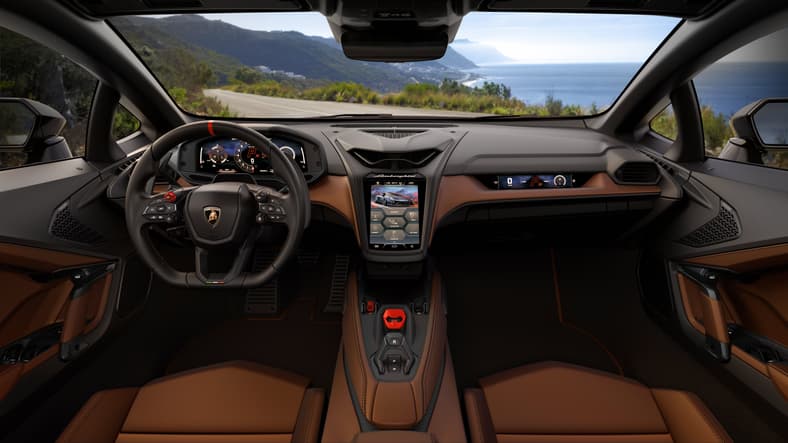
Drive modes allow you to dial in exactly how feral or friendly you want the experience to be. Hybrid settings let you choose between Hybrid, Recharge, and Performance, the last of which gives you control over how aggressively electric power is deployed. Overlaying that are the main driving modes: Città (City), Strada (Street), Sport, Corsa (Track), and Corsa with ESC fully disengaged. In most daily excursions about the City of Angels and/or Varano de’ Melegari—be it picking up dry cleaning in rush hour traffic to last minute salsiccia runs on empty highways—Sport wins the Goldilocks Award, surprisingly sharp, delivering instant aggression that will catch newcomers off guard. Explosive bursts of acceleration make short work of any commuter, and a bit more pedal ambition embarrasses even the most annoying Tesla gnat—a small but necessary joy in and of itself. Be aware: full-fat Corsa mode with safety nets deactivated is very clearly marked for expert territory.
Lastly, there’s the infamous Drift Mode. Ever since Sant’Agata converted to worshipping at the altar of AWD with the Murciélago, drifting in all but the very rare rear-wheel-drive Lambos (e.g. Gallardo Valentino Balboni edition, Huracán EVO RWD) was anathema. Not anymore, hallelujah! Activated via dedicated button on the steering wheel, Drift Mode won’t instantly morph you into Dominic Toretto, but it does make controlled oversteer genuinely accessible. Start modestly and the car allows a hint of yaw; dial it up and suddenly you’re surfing meaningful angles at serious speeds. The system tidies things up without numbing the organically hair-raising experience of losing grip, keeping the car talkative and forgiving rather than sterile. This is flat-out goofy fun, something a bit too rare in the modern supercar realm.
On track and on fast, flowing roads, the Temerario feels less like a hyena straining at the leash, and more like a well-trained predator.
ART + DESIGN
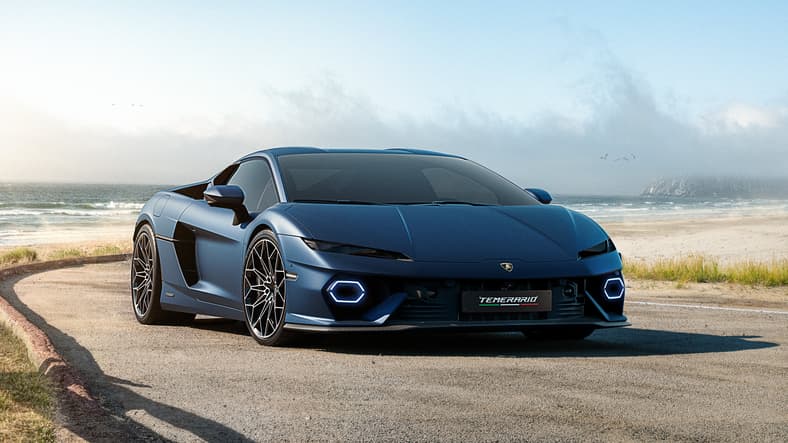
When not dropping the tiramisù designing EVs that look like a computer mouse built for the PAW Patrol set, Lambo’s cousins in Maranello prioritize smoother, voluptuous curves that personify Anita Ekberg’s hourglass silhouette. British competitors, on the other hand, lean elegant, stately, even restrained. Meanwhile the crew at Sant’Agata have always mercilessly lurched for the jugular—crafting brutalist machines with razor sharp angles and corners meant to disembowel. Despite many upstarts aping its geometric aesthetic, no one has ever seen a Lamborghini and confused it with any other marque—nor have Lambo ever clumsily tripped away from their design DNA like certain recently-derided countrymen.
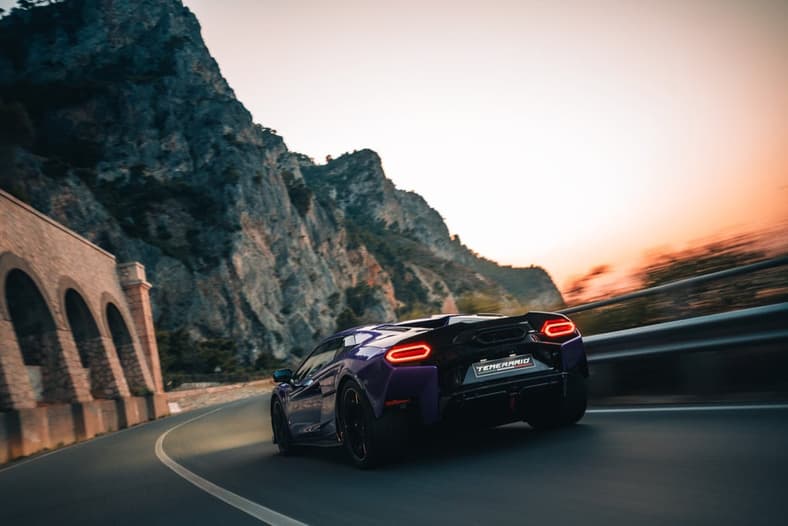
Here, their Temerario walks a finer line between aggression and elegance. It looks more refined than the Huracán, yet still unmistakably Lamborghini. The iconic Gandini Line—the instantly recognizable signature swooping silhouette of designer Marcello Gandini defining every Raging Bull since the revolutionary Miura—asserts itself instantly, if not a bit more subdued thanks to the Temerario’s higher waistline and lack of aggressive aero bits. The same rectangular headlights born in the Countach, evolved into increasingly more sinister glares from the Gallardo into the Huracán, squeeze into furious squints on the Temerario. Rare for a Lambo, its rear-end may just be its most unforgettable angle. With the engine proudly on display, the rear view emphasizes width and stance, with a stocky, planted look recalling classic Lamborghini bravado. Uniquely, the obese rear tires remain provocatively uncovered, suggesting the lascivious, unbridled power of a Nolan-era Bruce Wayne vehicle.
FINAL THOUGHTS
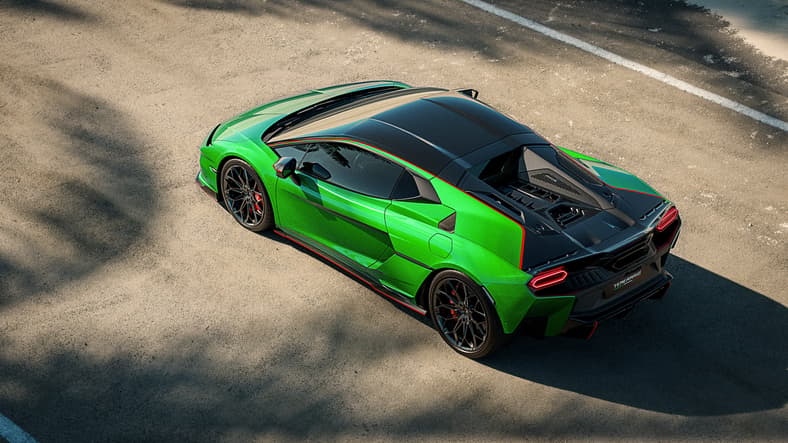
Soon we’re rumbling back to the Autodromo Riccardo Paletti for a post-lunch spin in the cars that 60+ years ago birthed this proud badge, and allowed the Temerario to even exist. And as thrilling as viscerally engaging those vintage machines is firsthand, what the entire experience allow us to do on this Heritage Day is bookmark the Raging Bull from a birds-eye perspective: Charting its arc clearly from the first 400 GT data point to the latest Temerario, its supercar storyline arcing like a comet across the automotive sky.
But really what’s most revealing is how Lambo’s newest toro sneaks a glimpse into the brand’s future—and we’re here for it. Spring break feral when you want it, Savile Row civilized when you don’t. And plenty engaging in between.
Follow Deputy Editor Nicolas Stecher’s travel, spirits and automotive adventures on Instagram at @nickstecher and @boozeoftheday.