
The Ferrari 12Cilindri Manuale Brilliantly Reinterprets A 6-Speed Stick Shift For Today
The 830-hp V12 flagship pairs Ferrari’s lauded 8-speed dual-clutch gearbox with a stick shift—stalls, jerks, and all.
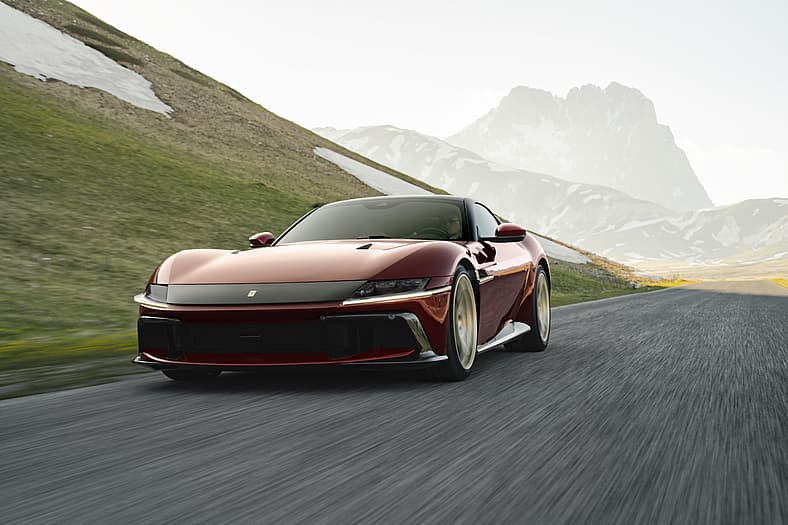
Given that Ferrari just launched its first, transmission-less EV, it’s surprising in a way that Maranello’s succeeding automotive creation is the first with a gated shifter in well over a decade. But knowing that the vessel for Ferrari’s new “Manuale-By-Wire” transmission is the 12Cilindri—a modern homage to a potent V12 heritage dating back to the very first Prancing Horse-badged car, the 125 S—the return of a stick-shift gearbox to the Ferrari lineup is entirely logical.
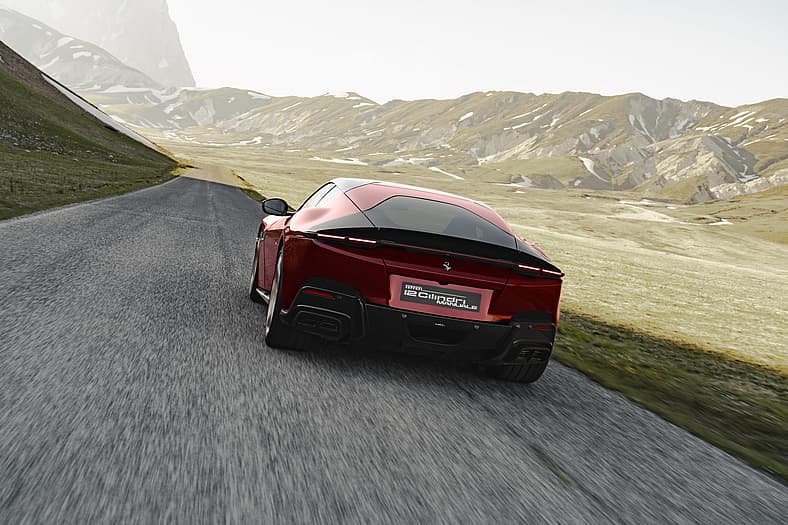
The naturally aspirated 6.5-liter V12 engine’s 830 horsepower is transferred to the wheels via the highly acclaimed 8-speed dual-clutch transmission that had its 2019 debut in the SF90 Stradale before going on to service the Roma and its Amalfi successor, the 296 GTB, and Purosangue, among others. The catch is that instead of changing gears automatically or paddle shifters, the 12Cilindri’s DCT is actuated by a gated shifter and clutch pedal that are both rigged by-wire, i.e. driver inputs are electronically transmitted to a computer that actuates the gearbox. We’d be remiss not to mention the automatic mode, but anyone who uses it—at least primarily—is missing the point entirely.
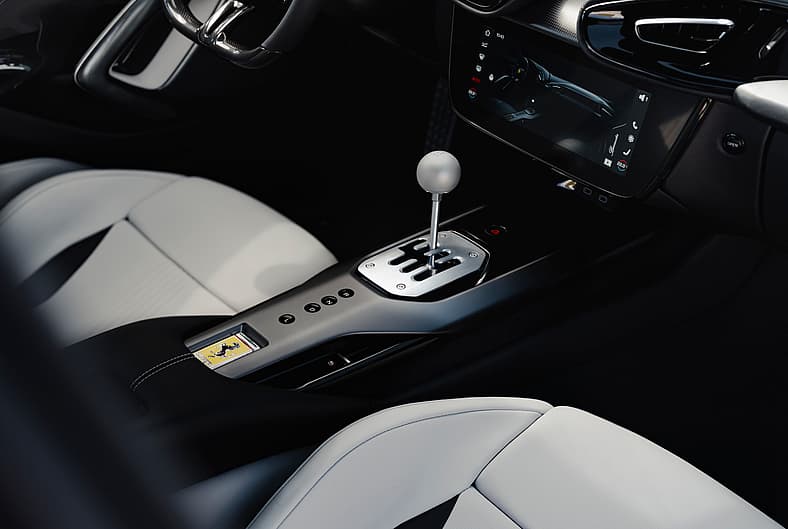
Gear selection is enabled by a kinematic mechanism, at the heart of which is a central rotating block made from high-strength steel. The clutch mechanism uses a profiled rotating drum coupled with a preloaded system that generates an initial increase—and then release—of load on the gear lever, creating a physical sensation that can be felt through the lever’s knob.
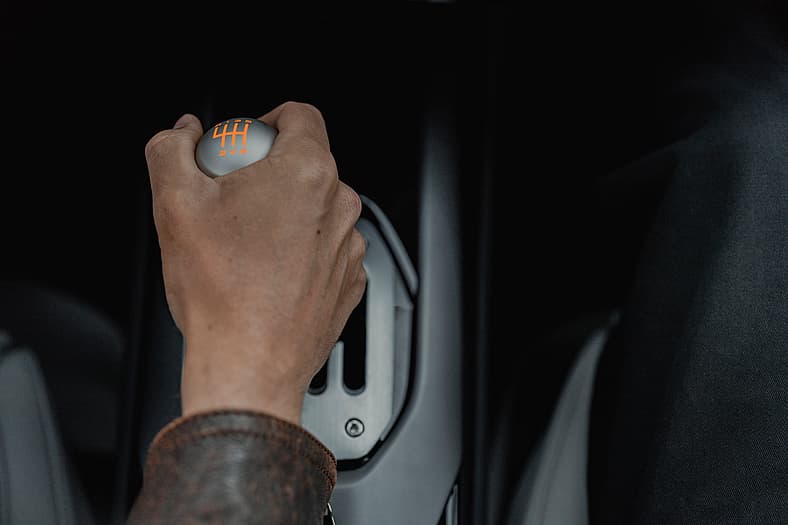
The clutch pedal works on the same by-wire principle: There’s no cable or hydraulic line connecting it to the actual clutch. Instead, a position sensor on the pedal assembly tracks exactly how far and how fast the pedal is depressed, and that data is sent electronically to the DCT’s control unit, which then triggers the real hydraulic actuation of the transmission’s own clutch packs.
The pedal itself is calibrated to reproduce the load-travel curve of a mechanically linked clutch—building resistance as you lift off, then releasing it at the engagement point—so the feel in your foot matches what a traditional clutch would deliver, even though nothing underneath is physically connected to it. Correct synchronization between pedal input and engine/gearbox response yields a smooth, precise gear change, but errors can still result in a jerk or a stall. Heel-toe shifts—where a driver uses one part of their right foot to depress the brake and another to blip the throttle simultaneously in preparation for a downshift—are also possible.
The gear lever, clutch pedal, and controls for Drive, Reverse, and Neutral modes send signals to the gearbox control unit, which manages manual inputs while leaving the DCT’s basic operating logic unchanged. Anyone who’s had the pleasure of owning a stick-shift Prancing Horse will recognize the gated shifter’s layout: Reverse is at the top of a six-speed steel plate, embellished in this application with an anodized aluminum sculpture in the shape of a tuning fork, which incorporates the control panel and key housing.
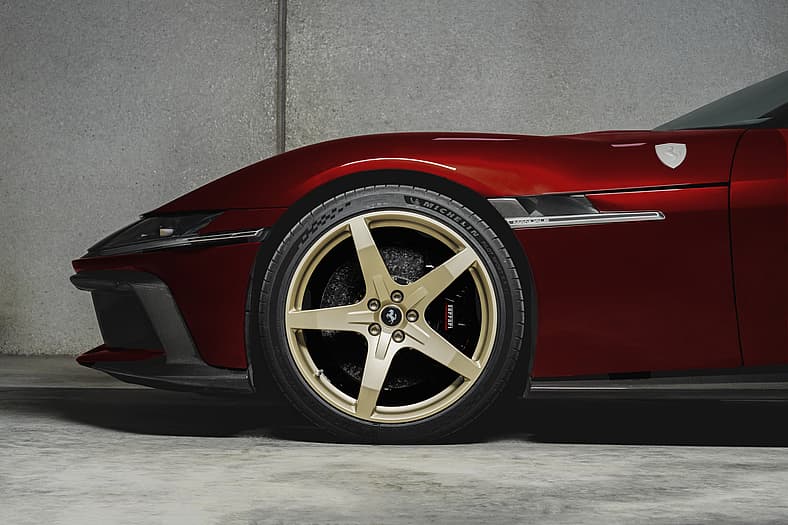
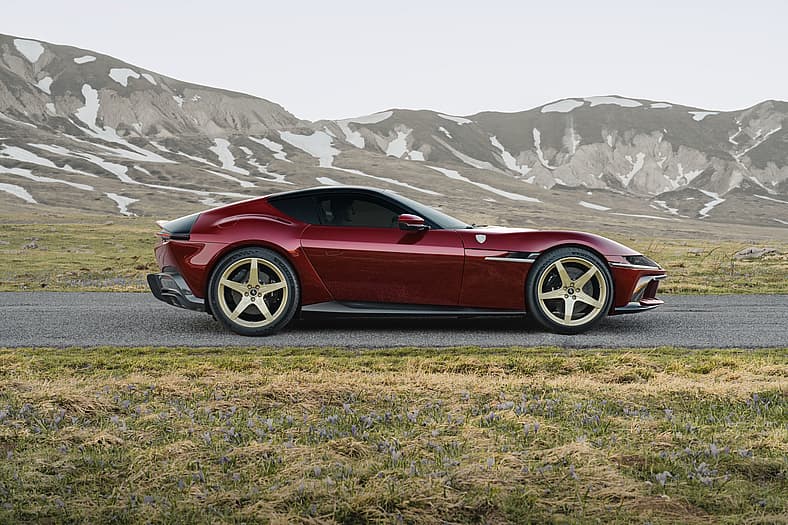
The Ferrari 12Cilindri Manuale is limited to 1,499 cars—a nod to the displacement of the first Ferrari 12-cylinder, produced back in 1947. Other references to Maranello’s manual V12 heritage are on the car itself—the rear wings feature a pinstripe finish that pays homage to the Ferrari 365 GTB4, aka the Ferrari Daytona. The five-spoke forged wheels—available in four finish options—are another classically inspired design element. The car itself is also available in 25 iconic Ferrari colors, including Rosso Rubino, Argento Nürburgring, Nero Daytona, Rubino Micalizzato, Rosso Dino, Giallo Montecarlo, Verde Zeltweg, Azzurro La Plata, Blu Pozzi, Bianco Mille Miglia, and Viola Hong Kong.
In our previous coverage of the Ferrari 12Cilindri Spider, the marque’s product marketing manager, Jacopo Marcon, called the V12-powered roadster “the most complete Ferrari GT of all time.” With the arrival of the 12Cilindri Manuale, we’d argue that the Spider has just been usurped.