
How Photographer David Bailey Turned The Eighties Into High Art
Supermodels, power dressing, and unapologetic glamour: a new Taschen retrospective showcases the famed British photographer.
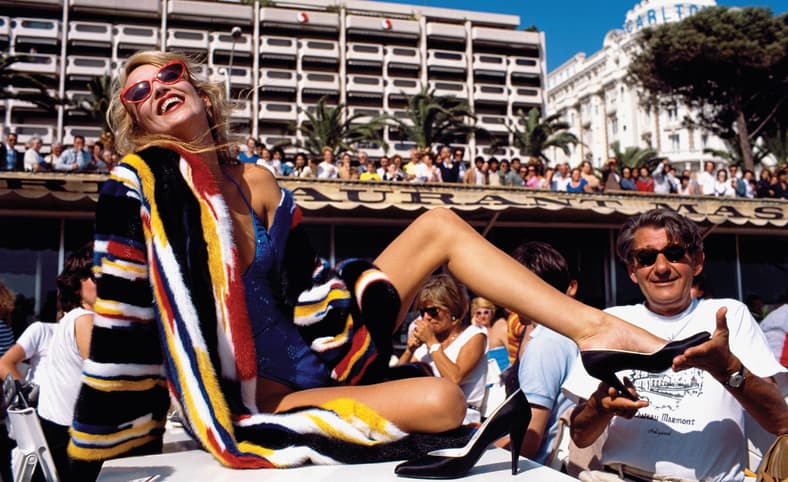
In the 1980s, fashion wanted to make a bold new statement and found in legendary British photographer David Bailey its perfect chronicler. After Bailey had shaped the style of the Swinging Sixties, fashion in the Eighties posed a new challenge: brighter colors, higher glamour, more statuesque models, extreme makeup, spandex, lycra, jumpsuits, power dressing, big hair.” A feverish dream, in other words, that needed an acknowledged master like Bailey to make it real—or perhaps hyperreal would be more apt.
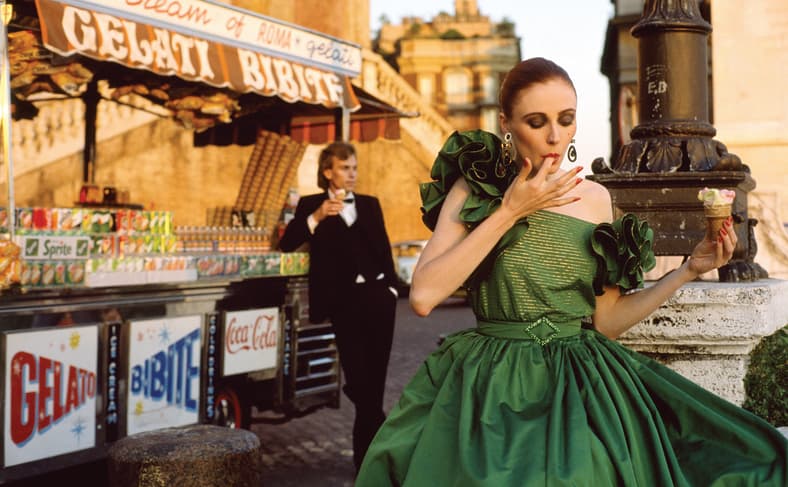
The declaration comes from a sensational book, recently published by art and culture experts Taschen, offering the definitive look at Bailey’s seminal work from the Neon Decade, which is sometimes overlooked in favor of his better-known images from the 1960s. After all, the brilliant 1966 film Blow-Up, directed by Michelangelo Antonioni, was inspired by the life and work of the man who all but invented “Swinging London” and married one of the era’s most beautiful stars, Catherine Deneuve, along the way.
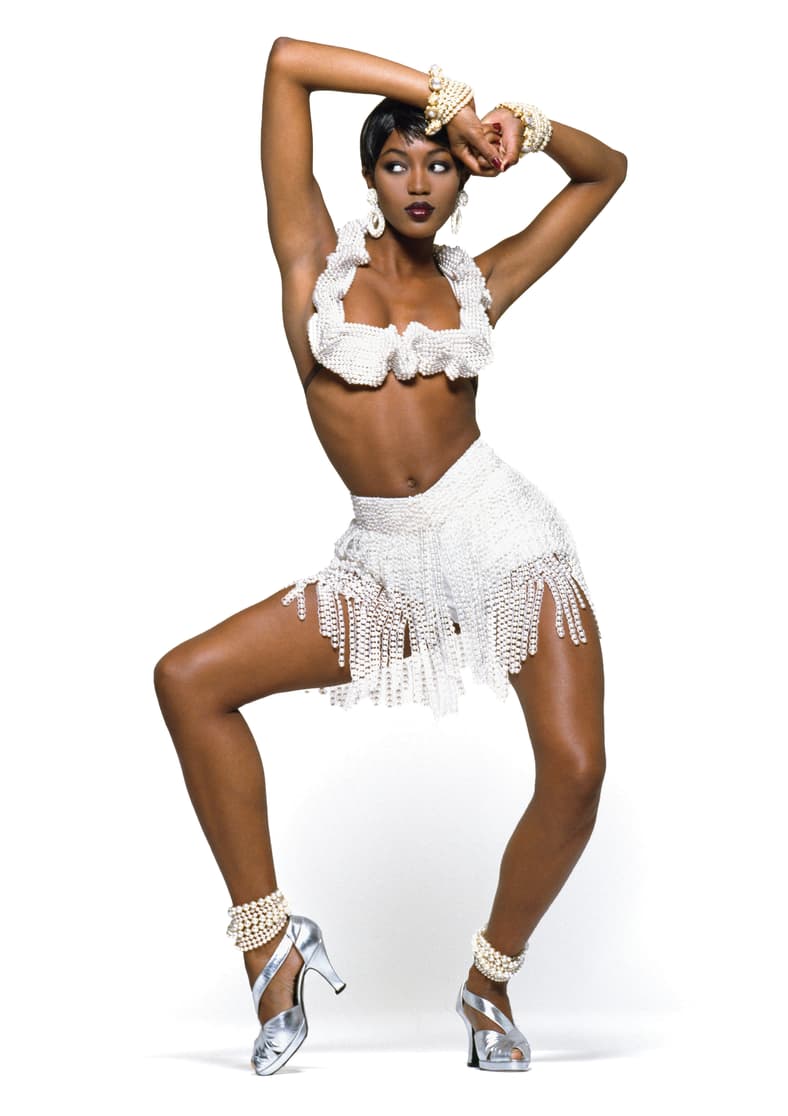
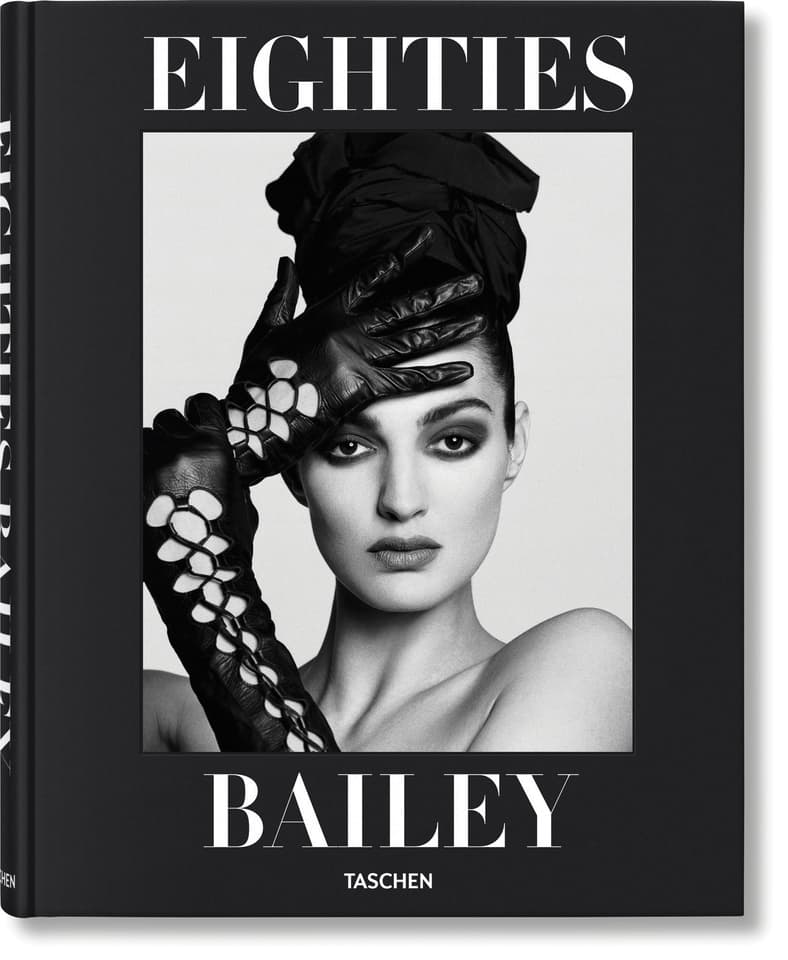
David Bailey: Eighties, from the acclaimed publisher’s XL series—also available in a $3,000 limited Art Edition accompanied by a signed print—compiles his era-defining fashion photography from the pages of British Vogue, Vogue Italia, Vogue Paris, and Tatler, among others. The volume is a visual feast with over 300 photographs that capture the decade’s electric energy in all its unapologetic excess.
Bailey’s early work helped both define and capture 1960s London, when he made stars of a new generation of models such as Jean Shrimpton and Penelope Tree. “Bailey channeled the energy of London’s informal street culture to create a new style of casual coolness,” Taschen notes. “Drawing inspiration from Modernism, he injected movement and immediacy into his work by using a very direct, cropped perspective” that was soon widely imitated and hugely influential. His aesthetic became synonymous with youth culture and the democratization of fashion, breaking down barriers between high fashion and street style.
But the transition to the 1980s required Bailey to evolve once again. Where the Sixties had been about natural beauty and spontaneity, the Eighties demanded something altogether different. As Bailey himself notes, “The Seventies worked out the chaos of the Sixties. [But] the Eighties turned out to be magic. We had learnt the problems of the Sixties and Seventies. The magic of the Eighties came as a surprise and possibly turned out to be the most amazing time in London to lead the world in fashion. The first time, the Americans wanted to come to London instead of Londoners wanting to go to New York. Seems like London was getting a second chance in fashion, art, theatre, and cinema. After years of stagnation, it had become a centre for the arts.”
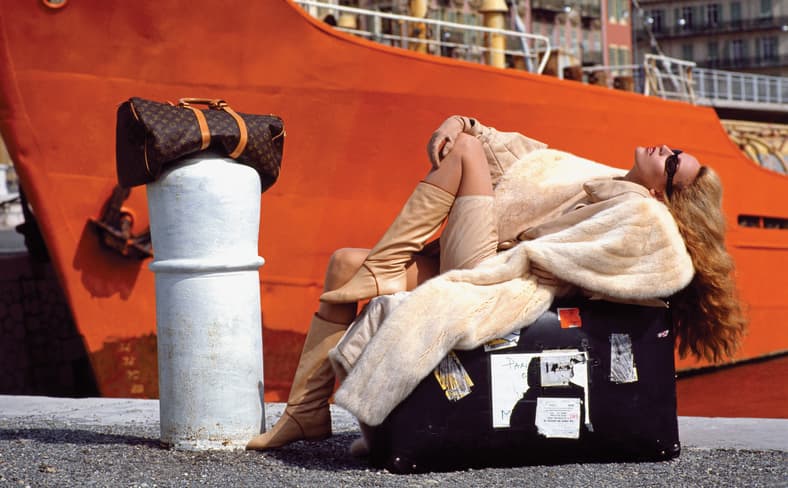
The cultural shift Bailey describes took place across all creative endeavors. On the music scene, London was already world famous thanks to the likes of the Rolling Stones, David Bowie, and Elton John. Now, a new wave of musicians from Duran Duran to Culture Club was reinforcing the city’s reputation as a global trendsetter. “In fashion we had the faces of Jerry Hall, Marie Helvin, Catherine Dyer, and Christy Turlington in the pages of our magazines,” Bailey recalls. “Whereas models used to go to New York to get photographed by the great American photographers, suddenly they realized they could save their fare by staying in London and getting it done here. So a new wave of models from Paris, Milan, and New York turned towards London.”
This geographical shift in fashion’s center of gravity gave Bailey unprecedented access to the era’s most sought-after talent. The book features couture, catwalk, and ready-to-wear collections by era-defining designers such as Azzedine Alaïa, Comme des Garçons, Guy Laroche, Missoni, Stephen Jones, Valentino, and Yves Saint Laurent. It “stands as a testament to a decade that dismantled hierarchies of taste to reintroduce fun and sex into fashion, reminding us that we need not think of either as dirty words,” as Taschen puts it. “Here, the jewelry sparkles, the silks shimmer, and the suits sprawl.”
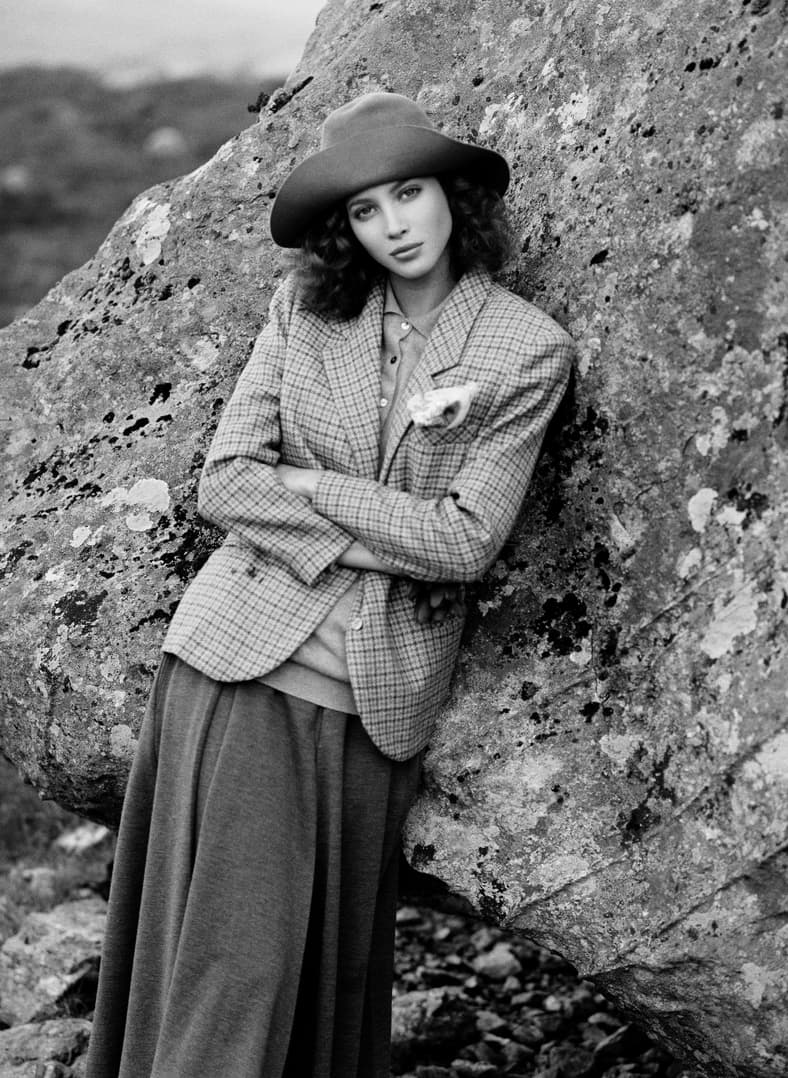
Bailey captured the most beautiful icons of the decade “at their most playful, invincible, and provocatively sexy,” including Naomi Campbell, Cindy Crawford, Catherine Deneuve, Princess Diana, Jerry Hall, Grace Jones, Kelly LeBrock, Christy Turlington, Tina Turner, and many more—forces of nature who embodied the decade’s “Go-Go” spirit. And “the cultural resonances of the 1980s present on our screens, runways, and concert stages make today ideal for re-contextualizing its enduring legacy of maximalism and excess,” Taschen notes.
In her contribution to the book, legendary fashion editor Grace Coddington opines that, “The new decade brought in a generation of women who knew what they wanted: power suits and high glamour. I wouldn’t call this look chic exactly, it was too extreme, with greased-back mullet hairstyles, colorful makeup, jackets with huge, padded shoulders worn atop the shortest mini-skirts, and dangerously high-heeled shoes.” Bailey “jumped right into this new vibe with his bold and often humorous portraits of the personalities of the time,” Coddington recalls, “such as Grace Jones, David Bowie, Jack Nicholson, and Tina Turner; affectionately tongue-in-cheek photographs of Helmut Newton, Karl Lagerfeld and Manolo Blahnik; and dramatic fashion images of high-voltage models such as Jerry Hall, Marie Helvin and Anjelica Huston. In so many ways, he owned the era.”
The top designers of the day included Gianni Versace, Azzedine Alaïa, and Thierry Mugler, with the aloof Karl Lagerfeld, who joined Chanel in 1983, ruling the roost from his perch in Paris. Lagerfeld might have had more gravitas, but Alaïa—who “had his own following of women with killer bodies who dressed in his unforgiving but ultimately flattering silhouettes, brilliantly cut to exaggerate every curve and minimize even the tiniest waist”—was the darling of the supermodels, Coddington writes. “Christy, Linda, Naomi, Cindy, Stephanie, Claudia, and Tatjana—those single-named girls most suited to wearing his clothes, who obliged whenever they had the opportunity.”
Back in London, Bailey’s Primrose Hill studio soon became “ground zero for the dynamic spirit of the times, which Bailey not only embraced but defined,” Coddington concludes. In capturing an era often dismissed as garish or overblown, Bailey proved that excess, when filtered through the lens of genius, can indeed become art.
This article originally appeared in the Spring 2026 issue of Maxim magazine. Subscribe here.