
Inside Kohanaiki, Hawaii’s Tranquil Temple of Stealth Wealth
On the Big Island’s Kona coast, a private club community is redefining Hawaiian luxury real estate.
There is a certain decibel at which wealth begins to embarrass itself. Too loud and it smells of effort; too visible and it invites commentary. This is how Kohanaiki on Hawaii‘s Big Island comes into focus: a private jurisdiction for those who have opted out of the noise. Truly serious money has developed a taste for silence. It is less interested in spectacle than in control, less enamored with display than with access.
In today’s uppermost tier of global prestige real estate, where square footage has become less persuasive than insulation from volatility, a new asset class asserts itself: the fortified residential club. Not merely resort-branded residences, but privately governed ecosystems where land, leisure, and social capital culminate in a single, defensible holding. Kohanaiki embodies how the ultra-wealthy are now choosing to live, invest, and, most importantly, withdraw from the public marketplace.
Kohanaiki occupies 450 acres of prime Kona coastline, a lava field, and oceanscape sculpted into what feels like a sovereign state. It is a club of affluent owners, yes—but that phrasing undersells the intent. Gates are discreet. Perimeter firm. Everything about the place suggests it was built by those who understand that privacy, once lost, cannot be restored.
That team is Kennedy Wilson, the Beverly Hills–based global real estate investment firm with roughly $30 billion in assets under management. Kohanaiki is a case study in how power builds itself. The clubhouse alone—67,000 square feet, completed at a reported cost of $65 million—functions as a kind of manifest destiny.
Where lava meets fairway, and the wind doesn’t negotiate, Director of Golf Lehua Wise reigns at Kohanaiki. The seasoned PGA pro and Hawaii native arrived by way of America’s most rarified fairways—Yellowstone Club and Hideaway in La Quinta—before assuming stewardship of Kohanaiki Golf and its Rees Jones–designed course.
“I fell in love with the feeling here,” she muses over crispy tiger prawns at the clubhouse. “Our team is delivering at the highest level, but we’re not performing; we’re at home on the links. Our members feel kinship, that’s the aura we strive to embody.” Wise notes that Kohanaiki’s golf programming touches both PGA Tour talent and legendary statesmen of the game: Matt Kuchar, Parker McLachlin, as well as appearances by Tom Watson, Lee Trevino, and Ben Crenshaw in pro-am settings.
Wise oversees everything that matters—play, pace, programs, people—but her sensibility is unmistakably local: intuitive, observant, deeply attuned to land and lineage. Her philosophy is less about spectacle than memory. “It’s the small things,” she observes. “Knowing their kids’ names. Making it feel like home.” At Kohanaiki, that attention reads not as hospitality but as fluency—the difference between managing a course and belonging to it.
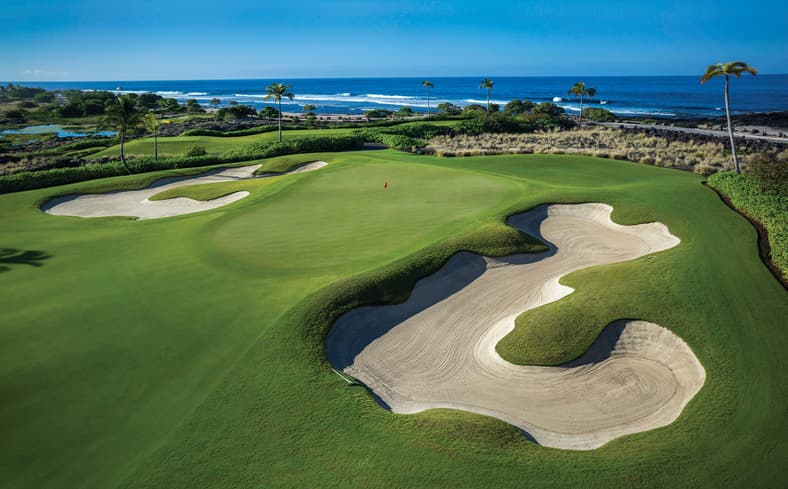
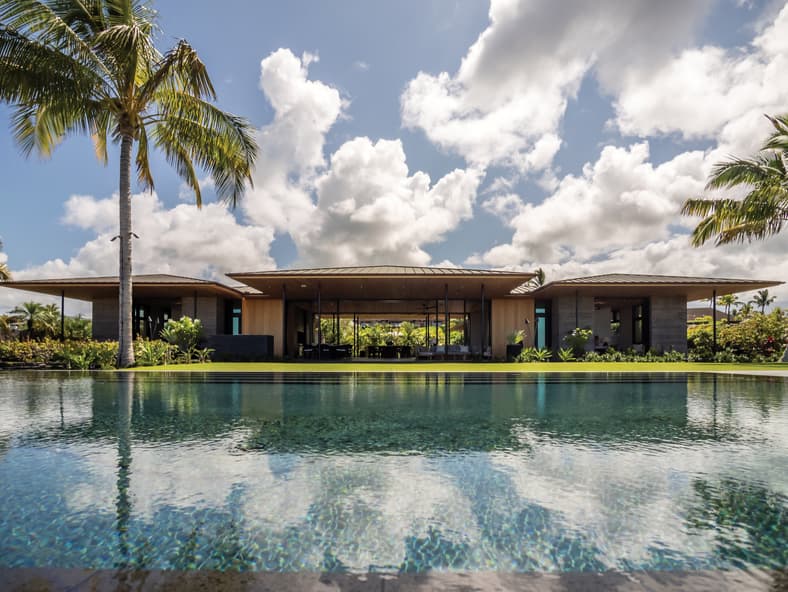
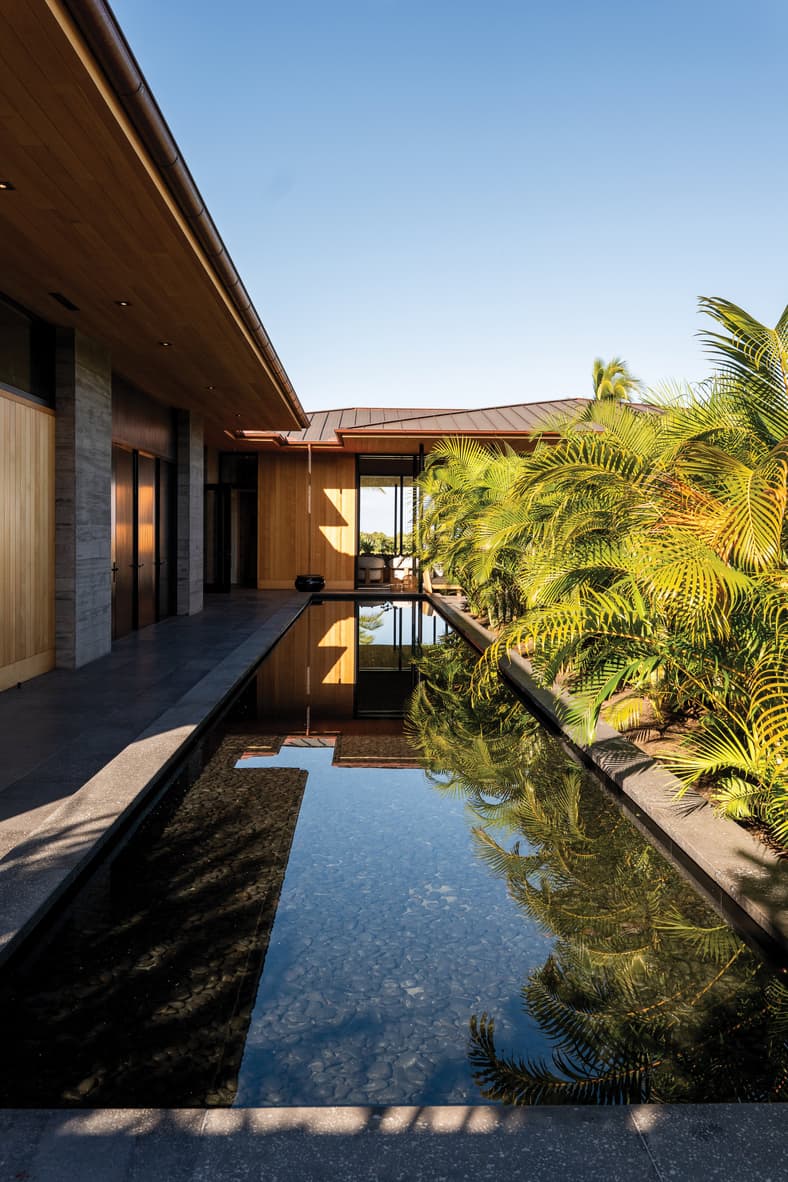
Poised in a prime, front-row location overlooking the 16th tee, Hale Kai Apo is an apex asset in the stealth wealth market. The $23.5 million listing sits lightly on 1.17 acres, designed by architect Shay Zak, whose work on the Kona coast has made him a specialist in disciplined excess. Zak designs the way certain men negotiate: no wasted motion, no visible compromise.
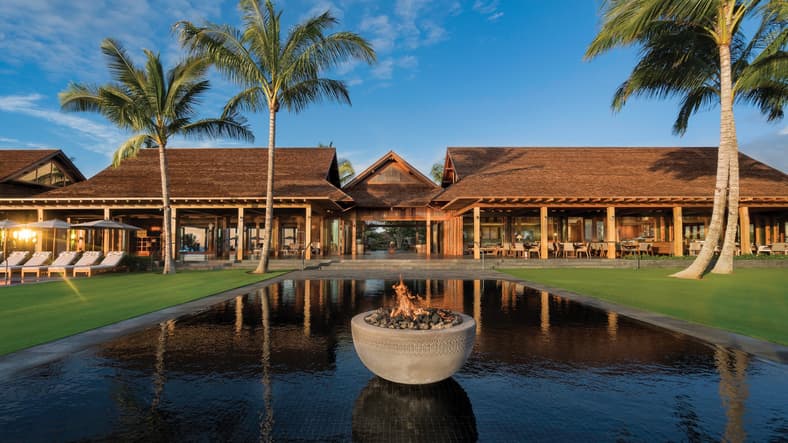
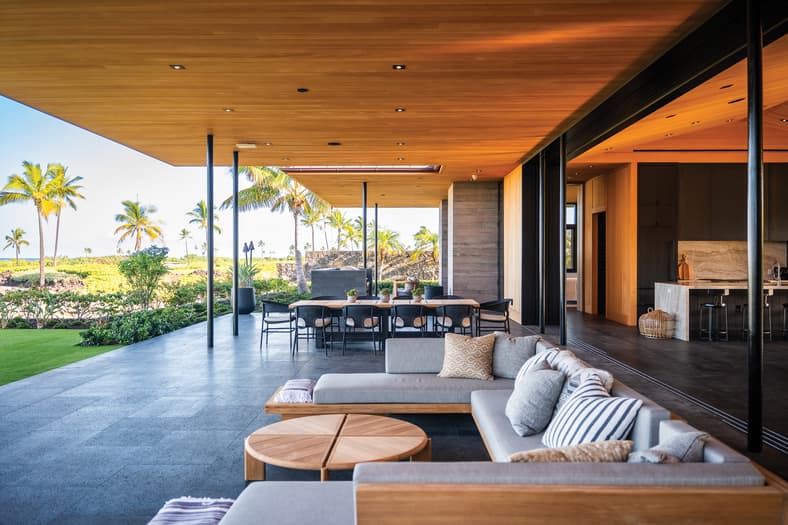
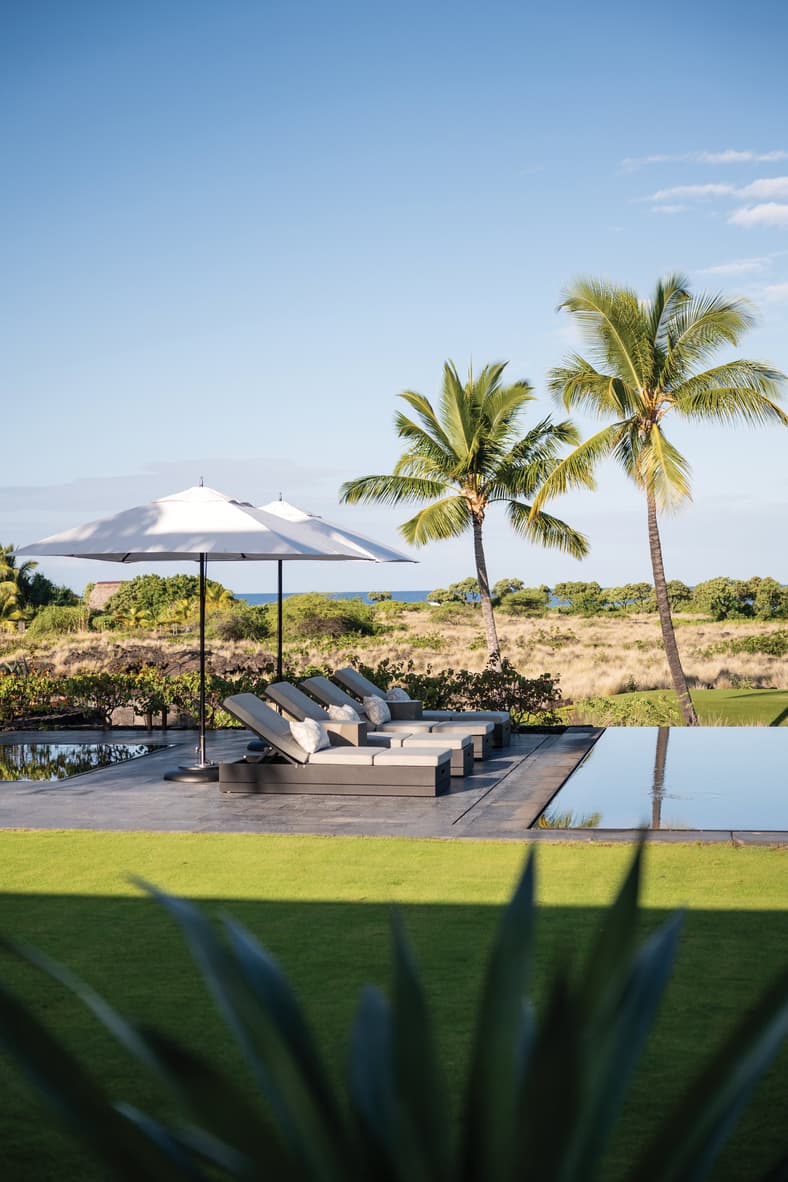
The home unfolds across 6,670 square feet, six bedrooms, and, as Carrie Nicholson, Kohanaiki’s Principal Broker, shows us, two additional flex spaces. “These modern rooms can just as easily host strategy as intimacy,” she elaborates. “Glass walls slide away rather than open, erasing the line between interior and exterior.” A 1,280-square-foot lanai opens to an infinity pool, jacuzzi, sun deck, and full outdoor kitchen. This is where conversations slow down, the ocean absorbing whatever bravado remains.
Ownership of Hale Kai Apo includes full access to the Kohanaiki apparatus: an oceanfront gym stocked to professional standards—elite training machines, free weights, an armada of Pilates reformers; spa designed for deep, unhurried recovery; a plush cinema, a posh bowling alley, and a concierge team with a deep and discreet Rolodex, the kind of reach once reserved for Mayfair clubs. This is not a vacation house. It is a base of operations.
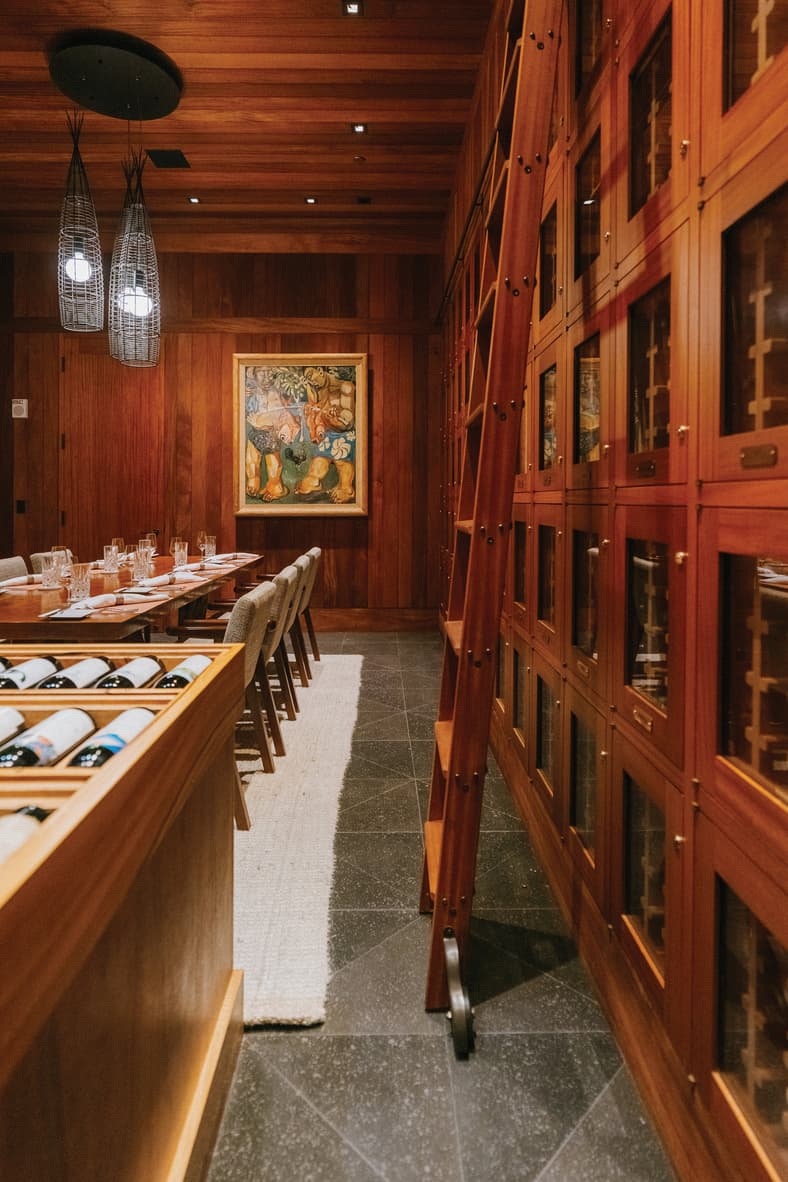
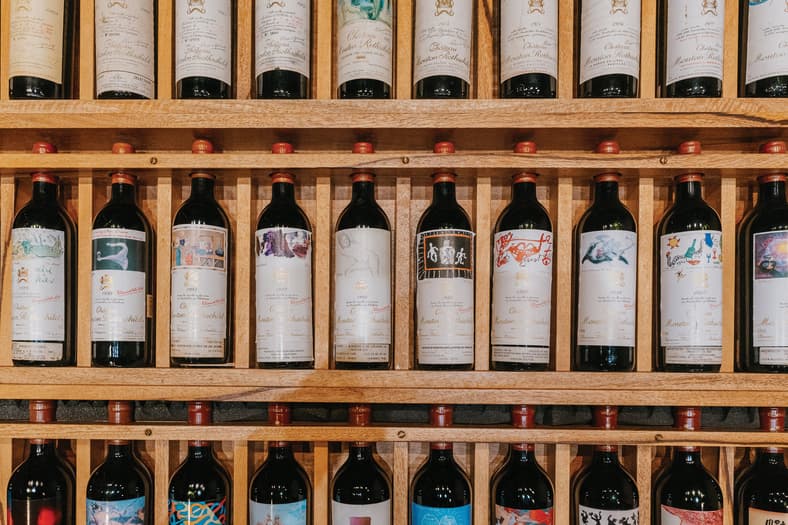
But a trophy property like this, for all its glass and acreage, tells only half the story. For the full picture, you have to pay attention to what Kohanaiki hides. Here, the most valuable square footage is measured in secret rooms behind hidden doors. When pushed just so, a wall panel reveals a temperature-controlled vault that feels less like a cellar than a state archive. Inside rests one of the most quietly astonishing wine collections in private hands: a complete Rothschild run, uninterrupted from 1964 through 2020, with the 2021 and 2022 vintages scheduled to arrive like titled heirs completing the line. It’s the kind of continuity museums dream of and auction houses fantasize about.
The origin story is suitably ceremonial. The collection was originally assembled to mark the opening of the Kohanaiki clubhouse—a gesture of gravitas, the vinous equivalent of laying a cornerstone. Over time, it became one of the club’s most revered assets. The labels alone read like a syllabus from École des Beaux-Arts. Joan Miró’s surreal exuberance. Marc Chagall’s floating blues and biblical melancholy. Pablo Picasso, posthumously present, still dominating the room. Andy Warhol, turning consumption itself into the subject. David Hockney, all calibrated line and luminous restraint. This is not a collection so much as a compressed history of postwar Western art, arranged with monastic discipline. To stand here is to understand something essential about modern power.
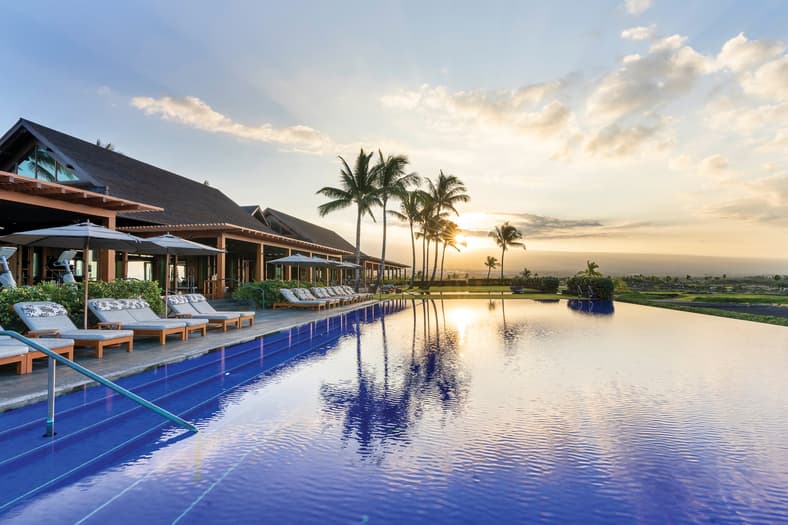
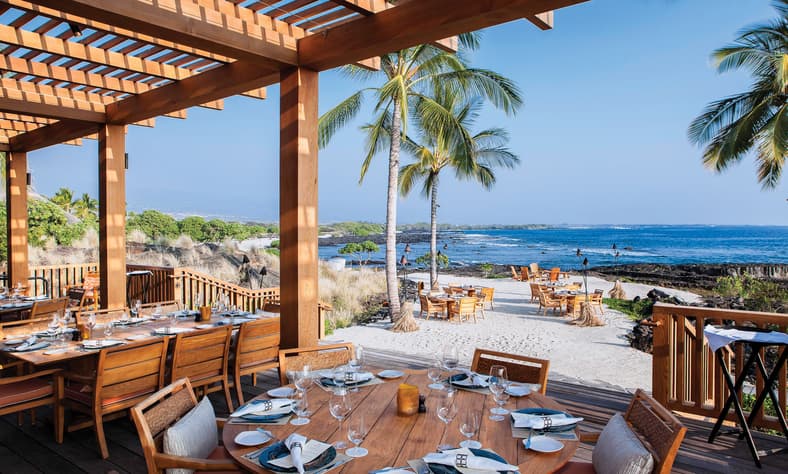
Dining at Kohanaiki nourishes a sense of place. At Kōnane, sunsets spill across the 120-seat chophouse and sushi bar while Executive Chef Robin Nishizaki—a Cicerone Certified Beer Server and inventive seasonalist—orchestrates menus rooted in island terroir. Wine is its own language here: guided by Master Sommelier Andy Myers, exclusive tastings and rare pours—some of which never appear on any other Hawaiian list—turn your table into a curriculum of pleasure. At the Beach Club, seafood arrives with the logic of the day’s conditions rather than a fixed script. Across both kitchens, dining here feels inevitable rather than performative; sublime sashimi dares not compete with the setting, it subtly reinforces it. Still, not every appetite here is answered with a cork. Kohanaiki’s craft brewery and tap room is concealed beneath the clubhouse, tuned precisely to members’ tastes—however eclectic or eccentric—producing small-batch ales that don’t bear a barcode or enter commerce.
On the wellness front, members arrive at the spa compressed by travel, work, weather, and time; they leave realigned, bodywork and aesthetics completed without fuss. Treatments are corrective and indulgent, restorative without sentimentality. The spa delivers precision: heat applied where it matters, tension dismantled methodically, fatigue addressed both technically and emotionally.
What Kohanaiki ultimately offers is not escape but insulation. In an era when wealth is increasingly performative, this place makes a case for withdrawal. Not retreat—withdrawal. A strategic repositioning away from spectacle and toward systems that reward patience, taste, and restraint. Real power, after all, does not need to announce itself.
This article originally appeared in the Spring 2026 issue of Maxim magazine. Subscribe here.