
Inside The Glamorous Revival Of Miami’s Shelborne Hotel
The South Beach architectural gem that once hosted Frank Sinatra and Marilyn Monroe is better than ever following a $100 million restoration.
Frank Sinatra caroused by the pool. Marilyn Monroe held court upstairs. And the Beatles passed through during the frenzy of their 1964 U.S. tour — even amongst the colorful history of Miami Beach, the Shelborne By Proper Hotel, as it’s now called, has led an interesting and glamorous life, and its next chapter promises to be even more intriguing. Originally opened as The Shelborne in 1941 on Collins Avenue, the oceanfront property arrived during Miami Beach’s first true golden age, when the city transformed from a kitschy tropical escape into America’s winter playground for celebrities, socialites, and moneyed East Coast types. Over the decades, the Shelborne became one of the fixtures of South Beach’s mid-century style, though like many historic Miami hotels, it eventually lost its footing thanks to uneven renovations, oddball redesigns, and constantly shifting ownership.
Last May, the landmark reopened as The Shelborne By Proper following a reported $100 million restoration led by California-based Proper Hospitality. The relaunch marks Proper’s first Miami project and one of its most ambitious projects yet. Thankfully it also moves away from the loud nightclub-heavy version of South Beach hospitality that dominated the area for years. Walking through the property now, with its muted palette, softened interiors, and distinctly international crowd, it feels closer to a boutique hotel in Milan or Madrid than the stereotypical portrayal of modern Miami Beach.
The hotel sits on one of the best-known stretches of Collins Avenue, surrounded by landmarks from Miami Beach’s Art Deco and Modernist eras. The original building was designed by architect Igor Polevitzky, who helped shape South Florida’s early tropical modern style. Then in the 1950s, famed architect Morris Lapidus — known for the Fontainebleau and Eden Roc — added the sweeping curves and grand public spaces associated with mid-century Miami Beach. You can still see those different eras throughout the hotel today, from the original Art Deco bones to Lapidus’s more dramatic mid-century additions.
By the late 1990s and early 2000s The Shelborne had become a familiar South Beach story: a slightly shabby landmark struggling to compete with newer luxury developments. Brad Korzen, who founded Santa Monica-based Proper Hospitality, and his team recognized its potential though. The brand built its reputation restoring historic hotels without flattening their identity, and their properties are known for a design-forward, residential-style approach to luxury hospitality; like a penthouse owned by someone with impeccable taste and very expensive luggage.
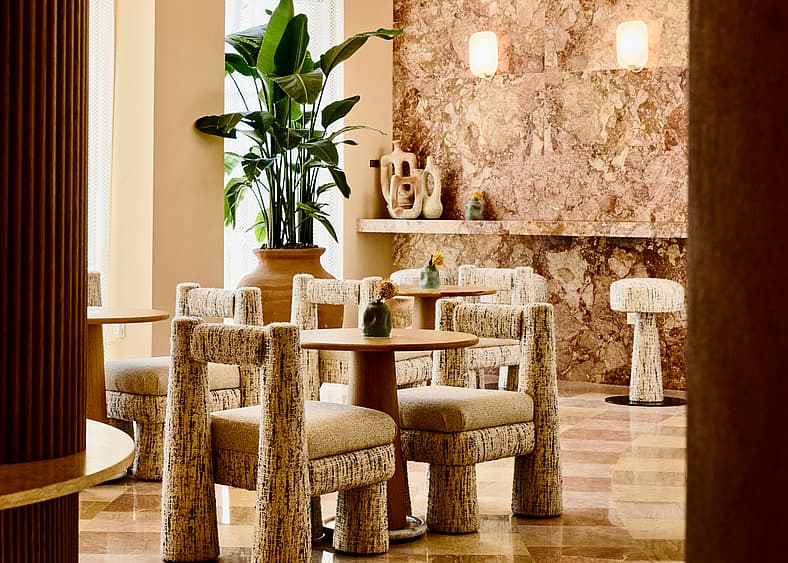
The Shelborne feels quieter and more understated than some of Proper’s other hotels, which speaks to their individuality. Here, the mood is softer, quieter, and European. Walking through the lobby and public spaces, it becomes surprisingly easy to forget you are smack in the middle of South Beach. The atmosphere feels more like Madrid or Milan Design Week than Miami Beach, which is exactly the point.
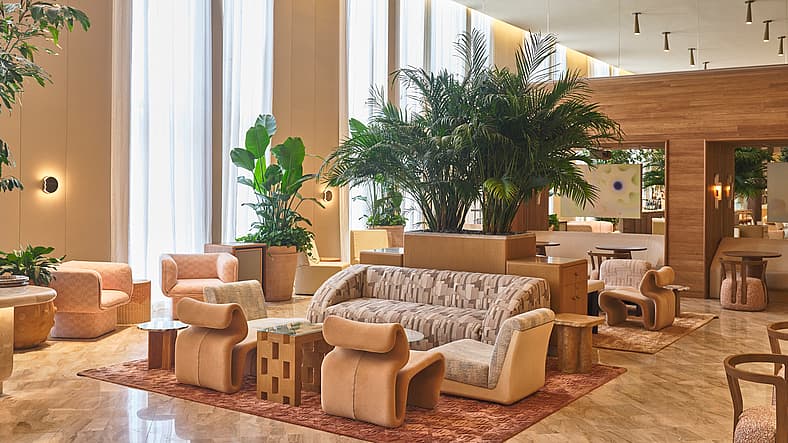
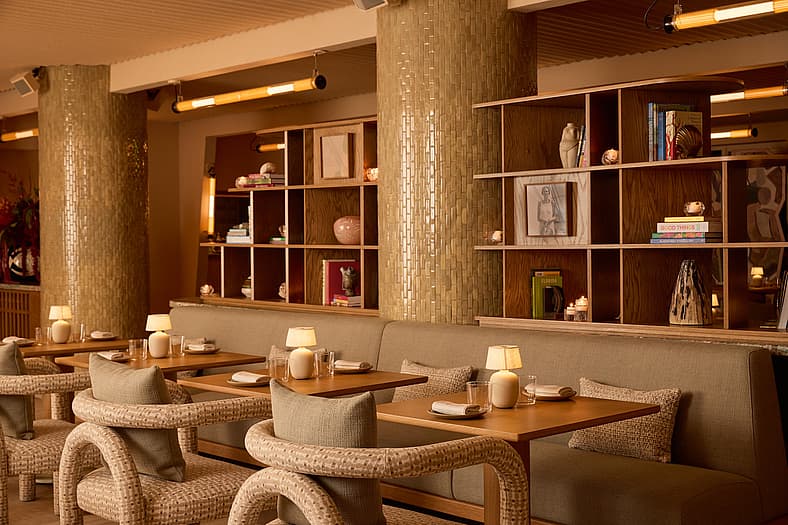
There is also something Prada-adjacent about the interiors in the way every surface, color, and material works together in a super-stylish and intellectually interesting, but not pretentious, way. Light peach, soft pink, seafoam green, cream upholstery, grained wood tables, and marble floors are all within the same palette. Even the restaurant staff uniforms and teapots seem to follow the same visual code. Tropical greenery appears throughout as well, but is never intrusive. The woven textile pieces in the lobby are especially good, adding warmth and texture without overwhelming the space.
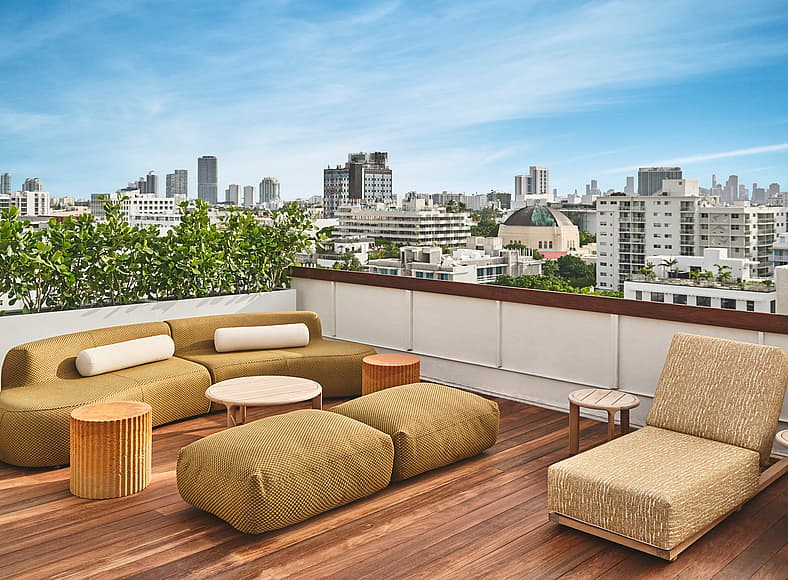
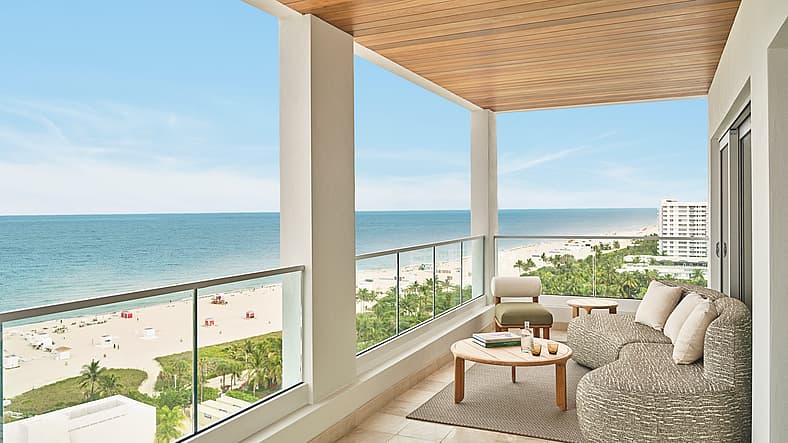
The suites carry over the same soft peach, cream, and seafoam tones found throughout the rest of the hotel, along with marble bathrooms, separate sitting areas, and a noticeably more relaxed layout than many standard hotel rooms. Like the rest of the property, the rooms avoid the generic beige-luxury look common in modern hospitality, instead feeling polished but comfortable and actually pleasant to spend time in.
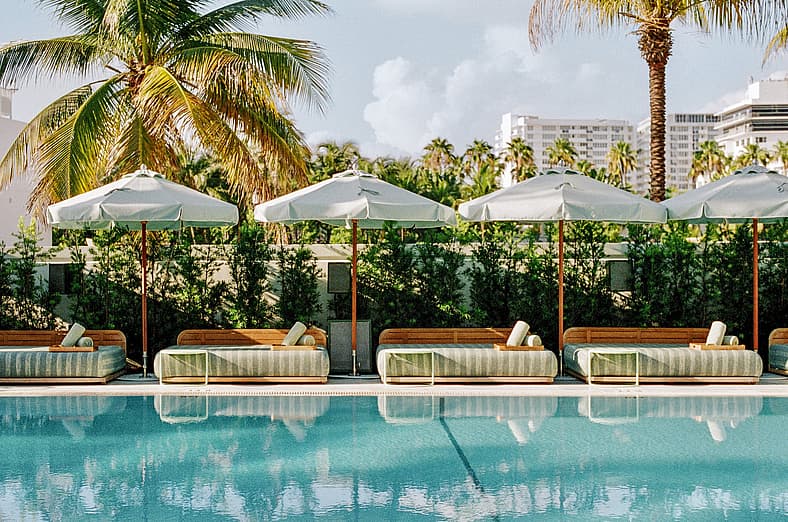
The Shelborne’s pool remains one of the property’s iconic spaces, with its classic curving mid-century shape, surrounded by the same soft peach, cream, and seafoam palette found throughout the rest of the hotel. Unlike many South Beach hotel pools with head-thumping soundtracks, the atmosphere stays relatively subdued, with more lounging, reading, and quiet cocktails. Framed by palms, striped loungers, and the hotel’s softened vintage aesthetic, it’s an on-brand idyll where guests actually want to spend an entire afternoon.
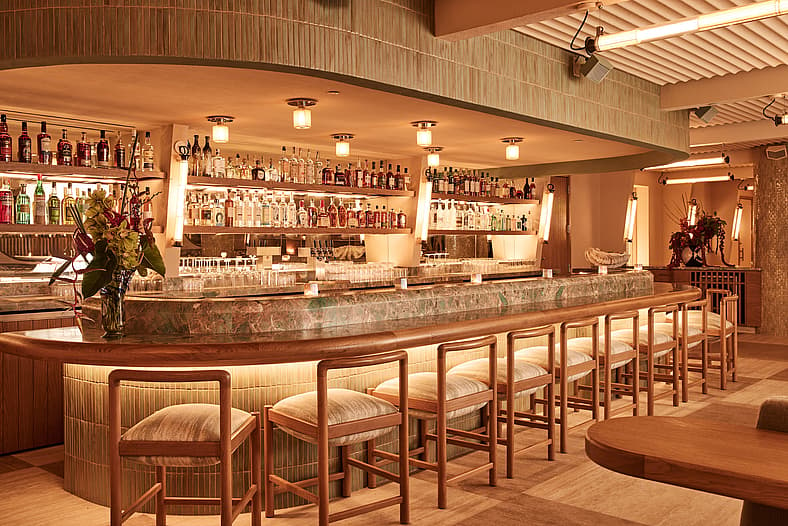
The relaunch also introduces Proper’s new ‘By Proper’ concept, which lets outside designers put their own stamp on different properties rather than making every hotel look the same. The Shelborne redesign was led by ADC Atelier, which approached the project less as a flashy reinvention than a careful recalibration. There are no conspicuous vintage furniture pieces here or collectible-design moments begging for Instagram attention—which gives the hotel a sense of confidence. It never appears desperate to convince guests how tasteful it is.
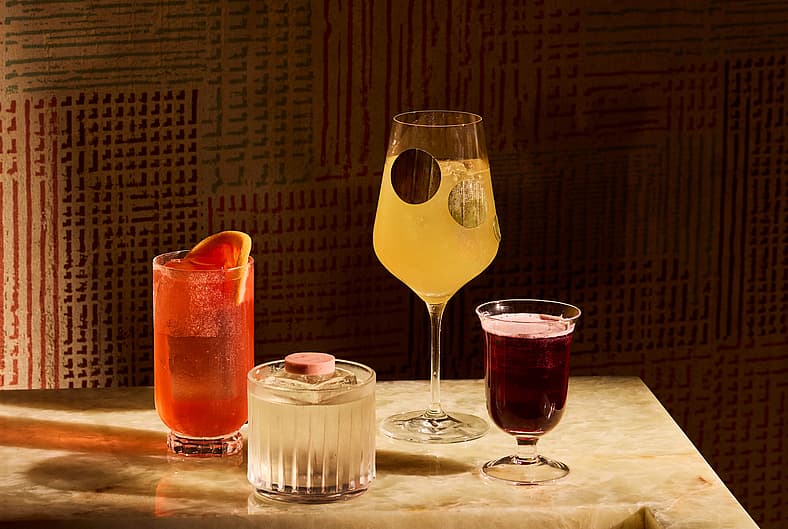
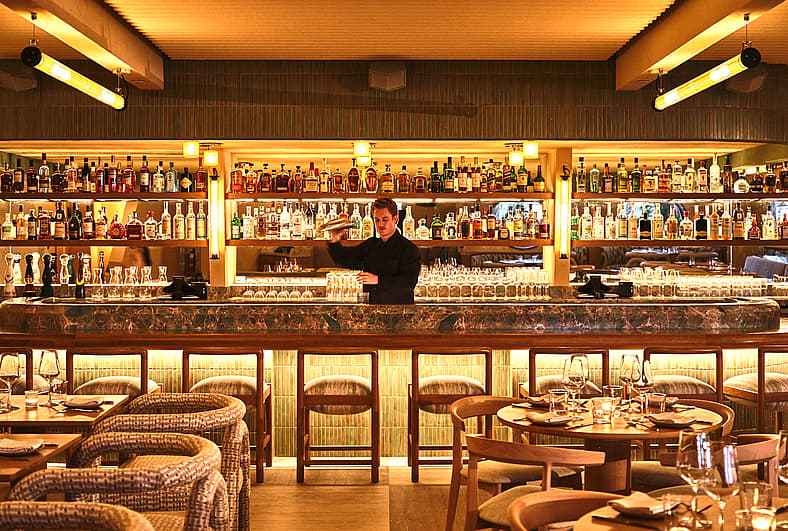
Even the luggage carts look like they were custom-designed, functional and attractive at the same time. Bathrooms feature the best Aesop amenities, perfectly aligned with the hotel’s low-key luxury approach. Food and drink play a major role in The Shelborne’s revival as well. Michelin-recognized chef Abram Bissell oversees the culinary program, including Pauline, the hotel’s gorgeous restaurant, and Little Torch, a cocktail lounge that channels old Miami’s tropical drink-and-late-night culture without tipping into parody. The menus pull heavily from Caribbean and Latin American influences rooted in South Florida’s culinary identity rather than generic luxury-resort cuisine.
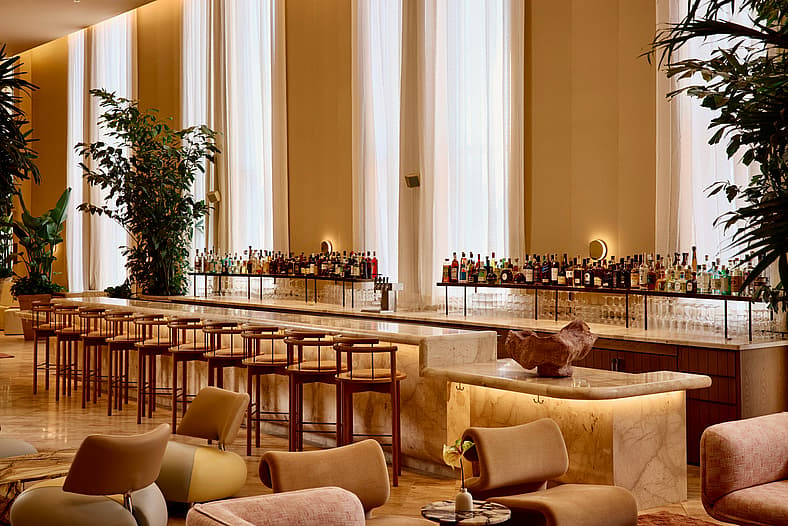
The overall food-and-beverage approach mirrors the hotel itself, with none of the louder hospitality clichés that once dominated Collins Avenue. Many of the city’s newer high-end projects seem increasingly interested in architecture, restoration, and old-school glamour; The Shelborne is leading the way, but in its own fashion. It doesn’t feel like an attempt to reinvent Miami Beach so much as a reminder of what made it so attractive in the first place.