
‘Our Money Is Broken’: Bitcoin Conference Founder David Bailey On Orange Gold, Global Peace, & The Future Of Finance
“Humans are going to venture out to other planets, and I don’t think they’re going to use U.S. dollars printed in D.C. when they’re on Mars.”
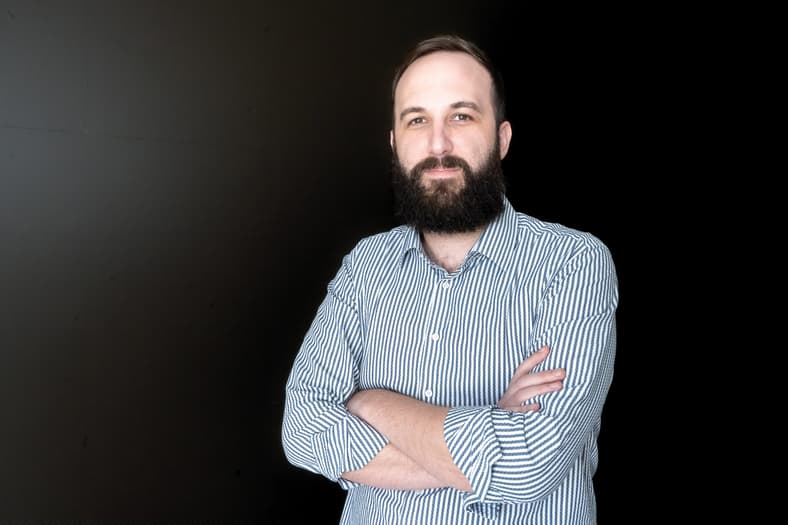
“Come for the gains, stay for the freedom.” The apparent slogan for the patriotic libertarian capitalist is actually one of many Bitcoin community mantras doled out during the below conversation with David Bailey. The founder of BTC Inc.—the parent company of Bitcoin Magazine and the Bitcoin Conference—first invested in the world’s largest cryptocurrency over a decade ago. Bailey has since expanded his reach by leading BTC Inc. through its acquisition by Nakamoto Inc., a public holding company he heads as CEO that aims to build something of a Bitcoin industrial complex. Bailey never got off the orange-gold roller coaster, even after enduring the most stomach-turning drops.
Instead, he stayed for the gains. The price of one Bitcoin has grown from $10 at the time of Bailey’s first purchase to over $126,000 at its peak in October 2025—a more than 1,000x return on the original investment. But the freedom is what excites Bailey, who also serves as a key crypto advisor to President Donald Trump, about Bitcoin’s future. While pondering the growth of the Bitcoin Conference—expect to see more than 40,000 attendees at the 2026 edition in Las Vegas this week—Bailey reveals his true, selfless intentions: “How can we have the world’s biggest celebration of capitalism and the individual? Those things aren’t celebrated enough. We want to throw the biggest party in the world for human freedom.”
Tell me about what first drew you to cryptocurrency and Bitcoin.
I was in college. I was 21 years old when I first heard about Bitcoin. I was going to go work in investment banking, and a buddy of mine who I’d interned with sent me an article about the Silk Road. And my first reaction was like, “Wow, I can’t believe people would be willing to trade drugs for fake internet money. This is definitely a Ponzi scheme.” I have the type of personality where if I think something’s bullshit, I’ll obsess over it until I can show why it’s bullshit. I started to do that with Bitcoin. I was trying to figure out why this can’t work.
I found this website called the BitcoinTalk forum—it’s one of the most deranged places on the internet, like 4chan crossed with financial analysis. You could think of any Bitcoin-related topic, go onto the forum, search it, and find thousands of posts about that topic. I had a whole list of reasons why Bitcoin can never work. Over months, I researched every reason, and I got to a point where I couldn’t tell you why Bitcoin would fail. I realized Bitcoin is the most disruptive idea of our lifetime.
I was like, “Shit, I should buy some of these.” The price of Bitcoin was about $10 at the time—I bought my first Bitcoins right after the first halving. I had just turned 22, and I was in my first semester of my senior year of college. In 2013, the price of Bitcoin went through the first bubble, going from around $10 all the way up to $260. As a college student who had never really made money before, to get a 26x return on an investment, it becomes all-consuming. I became completely obsessed. I stopped going to school. I stopped going to class. I didn’t care; it was just Bitcoin, Bitcoin, Bitcoin, Bitcoin.
I decided to go all-in on Bitcoin. The price had spiked to $260 before crashing to $50, and I lost a significant amount of money. I started questioning everything: “Did I miss something here?” To find out, I attended the first-ever Bitcoin conference in San Jose, Bitcoin 2013. I went there to decide if I should lean into this space or stick to a traditional career in finance. What I found was a room full of the smartest people I had ever met.
At the time, Bitcoin still had a “sketchy” reputation, so people weren’t open about it. Half the attendees were faking sick or making up excuses just to be there. These were brilliant people working on Bitcoin in their free time. Seeing all those “nerds” working for free on something they believed in… I realized that as a 22-year-old with nothing to lose, I’d regret it for the rest of my life if I didn’t jump in.
I actually interviewed to be employee No. 1 at a tiny startup called Coinbase. They told me they only had the budget for one person and hired someone else. I thought, “Fuck you guys—I’ll just start my own thing.” It worked out well for me, though it probably would have been even better if I’d been employee No. 1 at Coinbase, ha.
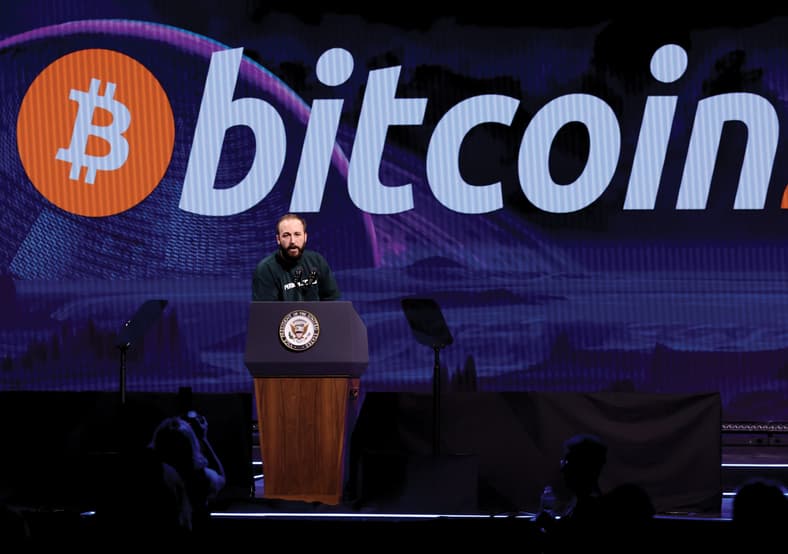
Were you inspired by the San Jose conference?
The conference inspired me to get into the business, but I didn’t know what to do, so I just started in media. At that time, few people knew what Bitcoin was. Common questions were, “What’s Bitcoin?” “How do I hold it?” and “Why would I want that?”
So, I started Bitcoin Magazine to answer those questions. Over time, we got into the conference business, the magazine business, the podcast business, then we got into the hedge fund business, the politics business, and mergers and acquisitions, and investment banking, and then we went public. It’s been a gradual process—we just wanted to see Bitcoin reach its full potential, and we made money along the way as we could.
I’d imagine that each of those facets presents different challenges. What were the biggest hurdles you had to overcome?
First off, the challenge was “wax on.” I went probably two or three years without drawing a salary just to pay the bills. The first big moment in our company’s history was in 2016/2017; there were these Initial Coin Offerings (ICOs). This is when crypto and Ethereum first came to the world. Ethereum introduced the idea of tokens. Everyone started doing a token, and I was investing in tokens. I didn’t ever really believe that these tokens were going to be successful, but they were making so much money. Before I knew it, I was investing more money into these tokens than Bitcoin. And in 2018, the tokens went into the shitter. And I lost a fortune.
We almost went bankrupt. I sat with this massive regret—I could have just retired onto a beach, and instead, I was gambling on stuff I didn’t really believe in. In 2018, I decided not to do anything else in crypto and focus on Bitcoin. If I went bankrupt with Bitcoin, at least I was betting on something I believed in. We went Bitcoin-only. Since we were Bitcoin-only, we decided to bring back the Bitcoin Conference, because at this point in time, there was no Bitcoin conference in the world. We pioneered the Bitcoin-only focus. That was the turning point of our company.
Our next breakout moment was during COVID. Because we curated a somewhat radical following, people were really pissed when we canceled our 2020 conference. In 2021, we decided to do an in-person conference. We went around the country trying to find a state or a mayor that would let us, and every place was totally chicken shit about it until we got to Florida. [Former Miami Mayor Francis] Suarez in Miami was like, “Fuck it, if anyone gets in your way, I’ll take a baseball bat and beat them.”
So, we decided to do a conference in Miami, and it was the first in-person conference in the world following COVID. We hosted 13,000 people—the conference before that was 2,000 people. We had no vaccine passports, no COVID tests at the door, and no masks that you had to wear.
Our message was, “Hey, if you come to this conference, you might die. And if you’re afraid of dying, don’t come. You can watch the live stream. But if you’re not afraid of dying, let’s go.”
People showed up in masses. To this day, people tell me that that event was like Woodstock. The vibes were so revolutionary. It was like, “Fuck COVID, fuck the masks, we’re just gonna do this.” And then that’s also where El Salvador announced Bitcoin as legal tender. The conference was just one of the most epic parties I’ve ever been to.
That was the inflection point. People were like, “Wow, this is what Bitcoin is about. It’s not just a financial tool; it’s about being able to have control of your own money, your own life, your own destiny.” There’s a slogan for Bitcoin: “Bitcoin’s ‘fuck you’ money.”
What you said about Bitcoin 2021 in Miami—that really embodies the spirit I saw at Bitcoin 2025 in Las Vegas. There are rebellious, almost countercultural overtones.
The cool thing about Las Vegas was Ross Ulbricht speaking. They put him away for two life sentences plus 40 years. They tried to ruin this guy’s life. And the President of the United States fucking pardoned our guy. It’s just really cool to see power being returned to the people.
The countercultural and anti-establishment vibe of Bitcoin is rooted in the fact that the establishment gains its power from control over the money. Before Bitcoin, you needed governments to manage the money, but now with Bitcoin, we don’t need them to do that anymore. It’s just software. The people get the full benefit of controlling the money. It really is re-empowering people—not just in America, but all over the world. There are Bitcoiners in the inner circle of every world government. You’re seeing all these Bitcoiners get more political power in each of their respective countries. And all of these Bitcoiners—they share a common ideology and worldview. Let’s say in 20 years’ time, Bitcoiners will be in the power positions worldwide.
As these people take over the power structures of their respective countries, you’re going to see a change in the global geopolitical landscape. Maybe there will be Bitcoiners in America and China who can work together because now we actually share a common ideological perspective. Right now, we have two completely different perspectives on the world.
How have attitudes toward Bitcoin changed since you began holding in 2013?
I think Bitcoin is hitting a mainstream moment. I know a lot of people who have more trust in Bitcoin than they have in, like, U.S. Treasuries. People are so used to getting paid in a currency that is going down in value. You get paid in dollars, and 10 years ago, the dollars they’re paying you today would have bought you a lot more. People just have to accept inflation.
I’ve also seen people who started with very humble means—maybe they started with hundreds or thousands of dollars—and over time, thousands of dollars became hundreds of thousands of dollars. And when people get access to hundreds of thousands of dollars, they’re able to actually become the person they want to be. They’re not like a slave to their job; they get to go pursue the things they’re passionate about. They gain a sense of self-confidence. When people’s money becomes valuable again and actually works for them, it empowers them to go forth into the world and go do things.
What do you say to people who think Bitcoin will die?
We have a saying in Bitcoin: You get your first Bitcoin at the price you deserve. The most skeptical people will buy Bitcoin at $500,000 or $1 million. They can buy it later. There are tons of skeptics, especially people in authority. They feel like it’s a critique of the system that has made them successful. And it is a critique of the system. It’s like, “Sorry, your control of the money printer is over.”
People at some of the highest positions of authority—including President Donald Trump—are starting to fully embrace it, and the upsides are obvious. But is there anything that makes you worried or apprehensive as Bitcoin continues to explode in popularity?
Even though President Donald Trump is very much of the billionaire class—he plays the anti-establishment card really well—there’s a reason he’s been so successful. He’s very entrepreneurial, and he sees the potential in things where other people don’t. According to him, what drove him to Bitcoin was after the last election, they seized a lot of money from him. He felt like the political system used the monetary system to go after him, and they do that all the time against normal people. If someone was going to get it early, of course, it would be someone like Trump.
But we don’t want Bitcoin to be considered a Republican thing. It doesn’t really care about what your politics are. It’s just a piece of technology; you can use it however you want to as an individual. There are plenty of progressives who like Bitcoin for completely different reasons than why Trump likes Bitcoin. I look at it like the internet; it’s just a great tool to do stuff.
What was it like going to the White House as a crypto advisor to President Trump?
I joke with the president: In the past, if I had been within 500 yards of the White House, I would have probably been arrested. Now I walk into the Oval Office to talk to the president about Bitcoin, and he’s actually interested in the topic—it’s so surreal. One thing that it’s taught me is that I’m kind of a diplomat on behalf of Bitcoin. There’s this very anti-establishment message of Bitcoin, and at the end of the day, I have to help take this anti-establishment message and reframe it for the establishment in a way that’s palatable.
The biggest challenge is finding creative ways to figure out where we go next; you have to be able to come up with ideas that have never been done before. The U.S. Strategic Bitcoin Reserve, for example—no one had ever done that before. We had to pitch the idea and sell it, and then the support followed. There are a lot of ideas out there just waiting to be packaged up and shared; that is truly the hard part.
What is the Bitcoin community’s end goal?
I think the end goal is to become the reserve currency of the world—to make it where every government, every company, and every individual uses financial products that are backed or supported by Bitcoin. This shouldn’t just be something used by humans, but also something used by machines. I think we’re entering a world where AI agents will pay other AI agents, and I think they’ll use Bitcoin.
Beyond that, we’re entering a world where humans are going to venture out to other planets, and I don’t think they’re going to use U.S. dollars printed in D.C. when they’re on Mars. I really see Bitcoin becoming the value system of humanity. When it reaches maturity, I think the price of one Bitcoin is going to be 10,000 to 100,000 times more valuable than it is today.
What are some tips you’d give to someone who’s interested in buying Bitcoin?
The most important thing is to get off zero, even if you just buy a Bitcoin ETF (Exchange-Traded Fund) in your brokerage account. Once you have a little bit of Bitcoin, you’ll have an incentive to read and learn about it. To be a “real” Bitcoiner, you need to set up an account with an exchange where you can buy Bitcoin directly—you can do so with any amount of Bitcoin—and then take self-custody of it. There is a lot of responsibility; if you lose your private keys, you lose the Bitcoin. But once you control those keys, you are a self-sovereign individual. No one can take them away from you. That is when you truly have “fuck you” money.
Anything else you’d like to add?
If you feel like there is something wrong with how the world works—something that needs to be changed—it always comes back to money. Our money is broken, and the only way we can change the world is if we change the money. The money we have today is like the “One Ring” from The Lord of the Rings. We have to cast the ring into Mount Doom and start with something fresh; and that something is Bitcoin. Bitcoin isn’t just about the financial opportunity—which is immense—it’s really about building something new that works for everyone rather than just a few.
This article originally appeared in the Spring 2026 issue of Maxim magazine.